China’s Fifth Plenum: What Xi Jinping’s Latest Moves Mean for Canada
China’s Fifth Plenum, held in Beijing from October 26 to 29, 2026, offered an important indication of where President Xi Jinping intends to take the country. While the meeting did not announce a new economic blueprint or major changes to China’s trade policy, its decisions reinforced a central feature of Xi’s leadership: the Communist Party’s determination to strengthen its control over government, the economy and the institutions responsible for carrying out national policy.
For Canada, that matters. Ottawa is working to rebuild a more stable and productive relationship with Beijing, while navigating significant differences over trade, national security, technology and international affairs. Understanding the political direction emerging from Beijing is essential to assessing both the opportunities and the risks.
A plenum focused on political discipline
The most significant outcome was the adoption of a resolution on what the Communist Party calls “full and rigorous Party self-governance.” The resolution sets out a renewed commitment to internal discipline, stronger supervision of officials, tighter enforcement of Party rules and continued action against corruption.
The language is significant. The Party is not simply promising to investigate individual cases of misconduct. It is seeking to strengthen the systems through which officials are appointed, supervised and held accountable. The resolution calls for improvements to internal oversight, stricter discipline, stronger Party organizations at every level and closer control over how government decisions are implemented.
Xi has made Party discipline and the anti-corruption campaign defining features of his leadership. The Fifth Plenum confirms that these are not temporary campaigns. They are central to the way he intends the Party to govern.
There is an important distinction, however, between fighting corruption and strengthening political control. The two objectives can operate together. Greater scrutiny of officials may expose genuine misconduct, but it also reinforces the authority of the central leadership over the political system. The plenum’s emphasis on centralized leadership and democratic centralism leaves little doubt about the Party’s priority: consistent implementation of decisions made at the centre.
The economic strategy remains in place
The Fifth Plenum should not be confused with the meeting that established the framework for China’s next five-year economic plan. That work was undertaken at the Fourth Plenum in October 2025, which adopted recommendations for the 15th Five-Year Plan covering 2026 to 2030.
Those recommendations placed emphasis on high-quality economic development, scientific and technological self-reliance, innovation, domestic demand, further reform and national security. They also identified major objectives for improving China’s technological capabilities and strengthening its position in strategic industries.
The Fifth Plenum did not replace that agenda. Instead, it reinforced the political and administrative discipline the Party believes is necessary to carry it out. Its communiqué praised progress in economic development, national security and the implementation of the 15th Five-Year Plan, while making Party governance its central subject.
For foreign governments and businesses, this is an important signal. China’s economic direction is closely tied to national priorities set by the Communist Party. Industrial policy, technology development, investment and regulation must be understood within that political framework.
Why Canada should pay attention
Canada has considerable economic interests in China. Global Affairs Canada reports that bilateral trade in goods and services reached $113.9 billion in 2025. The federal government has also established an ambitious target of increasing Canadian exports to China by 50 per cent by 2030.
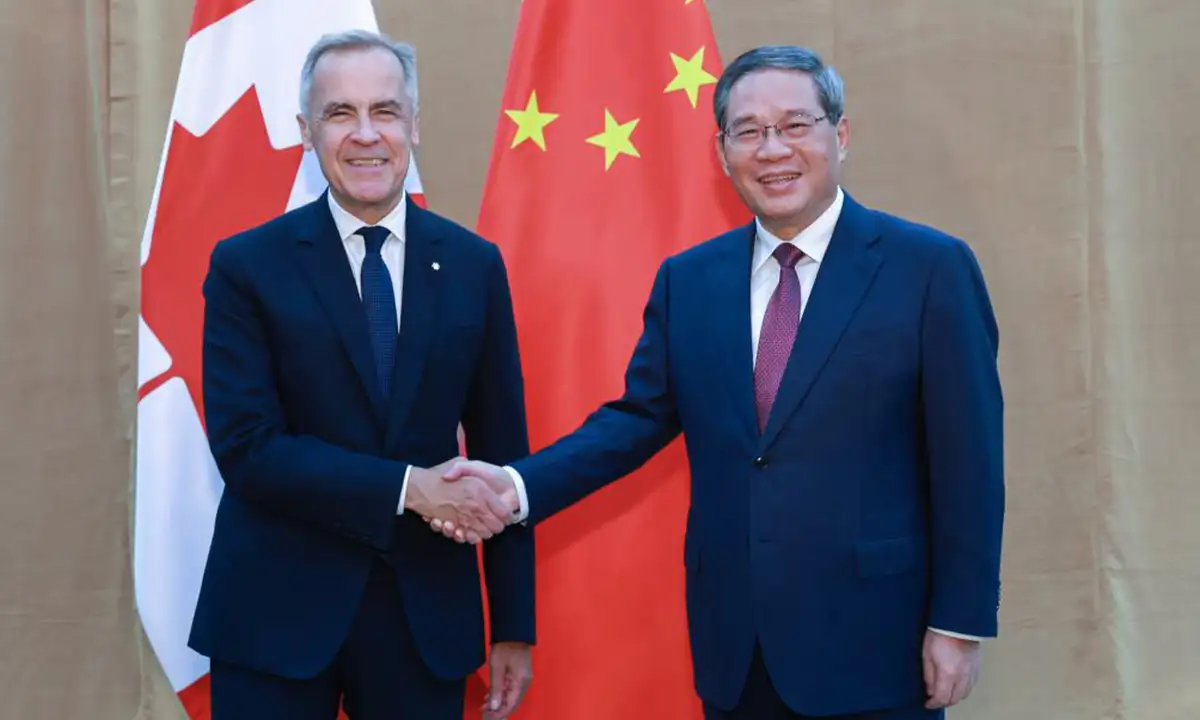
The relationship has entered a more constructive phase. During Prime Minister Mark Carney’s January 2026 visit to Beijing, Canada and China announced a new strategic partnership and an economic and trade cooperation roadmap. The agreement established mechanisms for regular discussions on trade disputes, investment, agriculture, intellectual property and other areas of mutual interest.
There have also been tangible commercial developments. China reduced tariffs affecting Canadian canola seed, canola meal, peas, lobster and crab under the January arrangement. In November, the two countries agreed to extend favourable market access for canola meal, peas, lobster and crab through the end of 2028. Additional arrangements are intended to restore access for several Canadian agricultural and seafood exports beginning in January 2027.
These measures matter to Canadian farmers, producers, exporters and coastal communities. They demonstrate the value of diplomatic engagement and the economic benefits that can follow when trade disputes are addressed.
But they do not mean that the underlying differences between the two countries have disappeared.
Opportunity requires clear-eyed engagement
The Fifth Plenum reinforces the importance Beijing places on political authority, national security and the Party’s ability to direct the country’s development. For Canadian businesses, that means commercial opportunities must be assessed alongside regulatory uncertainty, the role of state-owned enterprises, intellectual property protection and the potential for political disputes to affect market access.
China’s industrial ambitions also create both opportunities and competitive pressures for Canada. Its demand for energy, minerals, agricultural products and advanced technologies can support Canadian exports. At the same time, its investment in manufacturing, electric vehicles, batteries and other strategic industries can challenge Canadian producers and reshape global supply chains.
Canada has good reason to maintain a working relationship with China. The market is too important to ignore, and there are real opportunities for Canadian exporters and businesses. But Ottawa also has to be realistic about the political system it is dealing with and the risks that come with it. Better trade relations should not come at the expense of Canada’s security or economic independence.
The challenge for Prime Minister Carney is to build a relationship that delivers practical benefits for Canadians while protecting Canada’s interests when the two countries disagree. That will require more than trade agreements and diplomatic visits. It will require a clear understanding of Beijing’s priorities, and a willingness to stand firm when Canadian interests are at stake.