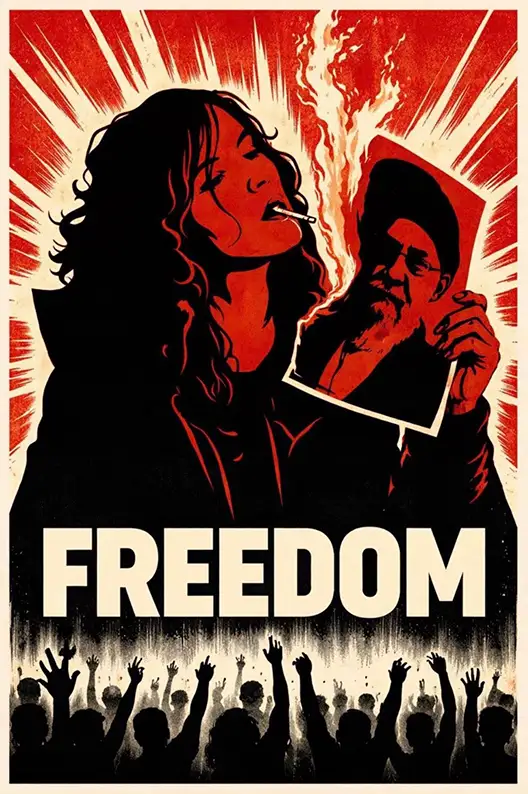
How Iran Fell into Darkness And Why Canada Has a Direct Stake in What Comes Next

In the decades leading up to 1979, Iran was a nation undergoing rapid transformation. The country was modernizing at a remarkable pace: women were entering universities in record numbers, major cities were expanding, and Iran’s economy, fueled by oil wealth, was becoming one of the strongest in the Middle East. Tehran was cosmopolitan, culturally vibrant, and increasingly connected to the world.

But beneath this progress was a deep and growing discontent. The Shah’s government, backed heavily by Western powers, ruled through an authoritarian system that left little room for political participation. SAVAK, the Shah’s secret police, monitored, intimidated, and tortured dissidents. Political parties were banned or tightly controlled, corruption was rampant, and wealth was concentrated among elites close to the monarchy. Many Iranians felt alienated from the state, resentful of foreign influence, and frustrated that modernization was happening without their voice or consent. The country was modernizing, but not democratizing.

This tension—economic progress without political freedom—created the conditions for a revolution. When Ayatollah Ruhollah Khomeini returned from exile in 1979, he tapped into widespread anger at the Shah’s repression and promised justice, independence, and dignity. Millions believed him. Instead, they traded one form of authoritarianism for another; far more repressive, ideological, and enduring.

From Revolution to Theocracy

Within months of taking power, Khomeini and his clerical circle dismantled the broad coalition that had fueled the revolution. Liberals, leftists, nationalists, and intellectuals were pushed aside, imprisoned, or executed. Revolutionary courts carried out mass trials. Mandatory hijab was imposed. Independent media was shut down. A new constitution placed ultimate authority in the hands of a single unelected cleric—the Supreme Leader.

A country that had been moving toward secular governance and economic modernization was thrust into a rigid theocracy that fused religion with absolute political control.

Four Decades of Repression

The 1980s cemented the regime’s brutality. The Iran–Iraq War provided cover for mass arrests and executions, culminating in the 1988 massacre of thousands of political prisoners. Through the 1990s and 2000s, every attempt at reform was violently suppressed—from the 1999 student protests to the 2009 Green Movement, when millions marched against a fraudulent election and were met with bullets, torture, and mass imprisonment.

By the 2010s, Iran’s economy, once among the strongest in the region, was crippled by corruption, sanctions, and mismanagement. Nationwide protests in 2017, 2018, and 2019 were met with lethal force. Amnesty International estimates that security forces killed roughly 1,500 people during the November 2019 protests alone.

Then came 2022.

The killing of 22‑year‑old Mahsa Amini by Iran’s morality police ignited the largest anti‑regime uprising since 1979. Women led the movement. Young people, who have known nothing but theocracy, risked their lives demanding freedom. The slogan “Woman, Life, Freedom” became a global rallying cry.

The regime responded with executions, mass arrests, and violence. But something fundamental had changed: Iranians no longer feared the state. They rejected the Islamic Republic not as a government that needed reform, but as a system that needed to end.

Why Reza Pahlavi Has Re‑Emerged as a Symbol for Millions

Reza Pahlavi, born in Tehran as the eldest son of Mohammad Reza Pahlavi, the last Shah of Iran, and Farah Pahlavi, the Shahbanu, has become an unexpected focal point for many Iranians—both inside the country and across the global diaspora.

This resurgence is not a simple case of monarchist nostalgia. It is rooted in a complex reality:

• Iranians today compare two authoritarian systems—the Shah’s secular autocracy versus the Islamic Republic’s theocratic totalitarianism.
• The current regime’s brutality has made the pre‑1979 era appear, in hindsight, far more stable, prosperous, and free.
• Reza Pahlavi has positioned himself not as a would‑be king, but as an advocate for a democratic, secular Iran.

POLITICO reports that many Iranians are now “increasingly willing to settle for Reza Pahlavi” as a unifying figure against the regime, despite past divisions.

Iran International and the Jerusalem Post both document how Pahlavi has become a leading voice for the diaspora, urging Iranians abroad to intensify political advocacy “until the fall of the Islamic Republic.”

This does not mean all Iranians want a return to monarchy. But it does mean that millions see Pahlavi as the only widely recognized, secular, pro‑democracy figure capable of rallying global attention and uniting opposition forces.

In a political landscape where the Islamic Republic has executed, exiled, or silenced nearly every domestic opposition leader, Pahlavi’s prominence is as much a reflection of the regime’s repression as it is of his own appeal.

Why Canada Has a Direct Stake

Canada’s connection to Iran is not abstract. It is personal, political, and strategic.

Prime Minister Mark Carney underscored this reality last week in his response to the U.S.–Israeli strike on Iran. Speaking in Mumbai, Carney stated: “Canada supports the United States acting to prevent Iran from obtaining a nuclear weapon and to prevent its regime from threatening international peace and security.” He described the strike as “another failure of the international order,” and emphasized that while Canada supports the objective of containing Iran’s destabilizing actions, the country “will not get involved” militarily. His remarks reflect a sober recognition that Iran’s actions reverberate far beyond the Middle East—and that Canada cannot afford to ignore the consequences.

1. Canada has lived experience with the regime’s brutality

Canada–Iran relations collapsed in 2012 after decades of escalating tensions. The murder of Canadian photojournalist Zahra Kazemi in an Iranian prison, the regime’s threats to dissidents abroad, and its sponsorship of terrorism forced Ottawa to sever diplomatic ties. The 1979 hostage crisis also directly involved Canada, whose diplomats helped rescue six Americans in the “Canadian Caper.”

2. The Iranian regime targets dissidents abroad—including in Canada

Iran’s intelligence networks have been linked to intimidation and threats against activists in Canada. Our country is home to one of the largest Iranian diasporas in the world, many of whom fled persecution. Their safety is a Canadian responsibility.

3. Canada has a moral obligation to support human rights

The Islamic Republic remains one of the world’s worst violators of human rights—executing protesters, imprisoning journalists, and suppressing women. Canada has historically positioned itself as a defender of human rights on the global stage. Silence now would be complicity.

4. A democratic Iran would strengthen global security

Iran is a state sponsor of terrorism, backing groups across the Middle East and destabilizing the region. A democratic, secular Iran would reduce global tensions, improve energy stability, and weaken extremist networks. Canada, as a G7 nation, has a stake in that outcome.

A Secular Nation Still Lives Beneath the Surface

Despite four decades of theocracy, Iran’s population remains overwhelmingly secular in its values. Women defy compulsory hijab daily. Students challenge clerical authority. Workers strike despite the risk of imprisonment. Artists, athletes, and intellectuals openly criticize the regime.

The Islamic Republic has failed to extinguish the modern, outward‑looking identity that defined Iran before 1979. Instead, it has created a society where the majority rejects the very ideology upon which the regime is built.

The Path Forward

Canada cannot liberate Iran. But we can:

• Support international accountability for human‑rights abuses
• Protect Iranian‑Canadian activists
• Sanction regime officials and their families
• Amplify the voices of Iranians fighting for freedom
• Recognize the Iranian people—not the regime—as our true partners

The struggle unfolding in Iran is not just about one country’s future. It is about whether a people who have endured 45 years of repression can reclaim the secular, democratic, and prosperous society they once envisioned.

For Canada, this is not a distant conflict. It is a fight that touches our history, our values, our diaspora, and our security.

And it is a fight we cannot afford to ignore.

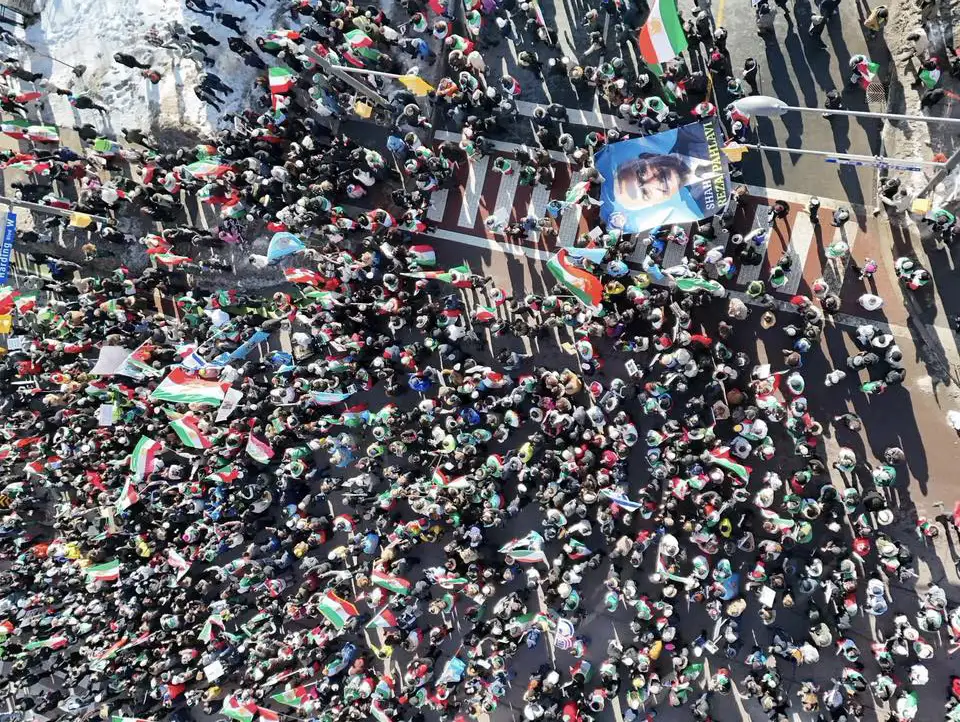
Photo: via Iran In Photos