Ottawa’s 2026 Municipal Election: What’s Changed—and What Hasn’t

Ottawa’s municipal government is in full campaign mode. Although municipal politics rarely grabs national headlines, how our city actually works—from the buses we ride and the streets we walk to the taxes we pay—is shaped by municipal government.

Many new faces were elected to Council in 2022, yet four years later, the city’s core issues remain largely unchanged: transit, addiction and crime, homelessness, housing and infrastructure.

Of the fourteen registered candidates running for mayor, there are four main contenders for the top job: Alex Lawson, a homebuilder whose platform is focused on fixing the basics; Jeff Leiper, the former Kitchissippi Ward councillor and longtime progressive whose campaign is about making Ottawa a city where things work; Neil Saravanamuttoo, a self-described political outsider who is adamantly opposed to Lansdowne 2.0; and incumbent Mark Sutcliffe, the “everyone-let’s-get-along” mayor who, according to a late-July poll, is leading the race with around 45 per cent support—even though the same poll found that only 30 per cent of residents were happy with the state of the city.

Transit

Mark Sutcliffe spent much of his term dealing with the inherited and ongoing failures of the LRT system. Train stoppages repeatedly disrupted service, while bus shortages, driver shortages and frustrations with OC Transpo leadership became recurring themes. The creation of an LRT subcommittee to oversee the system and ensure accountability did little to resolve the problems, and the body was dissolved in 2025 after nearly three years. Ongoing problems with the Confederation Line continue to keep transit near the centre of public debate. The New Ways to Bus strategy, launched in 2025, brought a major overhaul of more than 100 routes but has only added to the frustration for many riders. As one Reddit user in r/Ottawa put it: “New ways to not bus…my commute will go from a 40-minute express to an hour and a half milk run through Kanata.”

If the transit issues had been fixed over the last four years, they might have been a defining campaign issue for Sutcliffe. Instead, the problems have opened the door to his main challenger, former Kitchissippi Ward Councillor Jeff Leiper, who has made OC Transpo a central part of his campaign. Leiper has promised to reverse bus service cuts tied to New Ways to Bus and to introduce a service guarantee for on-time performance.

Mayoral candidate Alex Lawson has promised not to spend any more money on OC Transpo, arguing that simply increasing the transit services budget will not fix the underlying problems. Candidate Neil Saravanamuttoo has pitched the idea of a buck-a-ride bus service, believing the best way to fix transit is to get people using it again.

Infrastructure and Housing

Housing remains a chronic challenge. Ottawa continues to grow through immigration, interprovincial migration, university enrolment and federal public-service employment. According to the city’s 2024 Housing Needs Assessment Report, Ottawa added more than 200,000 residents between 2006 and 2021 and is expected to add another 118,000 households by 2035.

Rents have risen sharply, increasing 61.3 per cent between 2014 and 2024 and pushing more residents toward housing insecurity. Despite legislation around renovictions, the city isn’t building homes at a rate that can keep pace with growth. Instead, high-rise condo towers continue to sprout across the city. Studies show that many newcomers to Canada initially turn to condos and rental units but eventually move out of the core in search of a home with a yard. It remains to be seen whether Ottawa will experience a Toronto-like condo correction.

Ottawa City Council voted against proceeding with the Tewin project, a proposed development near Carlsbad Springs that would have added tens of thousands of homes in a more community-oriented setting. Council cited ecological concerns, the project’s proximity to the Greenbelt and wetlands, infrastructure costs and questions surrounding consultation with First Nations communities.

Other debates over new housing have been contentious, including the Lansdowne 2.0 redevelopment. Beyond reducing the seating capacity of the arena and losing a major tenant, the project became a flashpoint over the number of affordable housing units included in the towers being constructed. Supporters argued that adding more units of any kind would help relieve pressure on the broader housing market.

Addiction and Homelessness

Closely tied to Ottawa’s housing shortage is the city’s worsening homelessness crisis, which is also driven by addiction and mental-health challenges. Somerset Ward and Rideau-Vanier sit near the centre of the crisis. In 2024, the ByWard Market generated less revenue than the Parkdale Market, a decline attributed in part to perceived and actual safety concerns.

Small businesses have been particularly hard hit by the homelessness and addiction crisis. One downtown councillor was particularly offended when the word “vagrancy” was used to describe the worst behaviour of a portion of the homeless community, preferring that they be referred to as “our neighbours.” Whatever term is used, the behaviour being normalized on Ottawa’s streets is anything but community building, and Council has struggled to respond effectively to the addiction, homelessness and public-safety challenges.

The resulting policy gridlock continues to damage confidence in the downtown core, with some businesses closing or publicly expressing frustration over safety concerns that discourage visitors.

Of the four main mayoral candidates, Alex Lawson has a clear philosophical position—less crisis management, more treatment, recovery and public order—but, as of now, his detailed implementation plan for addiction and homelessness has not been released. Neil Saravanamuttoo’s “A Safer Ottawa” plan appears to be the most comprehensive approach, proposing a combination of affordable and supportive housing, immediate treatment, ANCHOR, cleanup and public-order measures, and transitional shelter, while remaining open to more interventionist approaches.

Policing

One of Mayor Sutcliffe’s strengths has been the relative stability of the Ottawa Police Service under Chief Eric Stubbs, who was hired just days before the 2022 municipal election. Stubbs arrived after the policing failures surrounding the Freedom Convoy and the controversy surrounding former chief Peter Sloly, who resigned in February 2022.

Stubbs has largely avoided the limelight while overseeing budget increases and new hiring, including 50 positions and 22 sworn officers in 2025. He has also worked with Ottawa bylaw officers and transit special constables through the city’s Core Strategy, which restored foot patrols and expanded coordinated operations in the ByWard Market.

The strategy is not limited to policing. It also partners with more than 30 community groups through the Integrated Community Situation Table to provide targeted support for people facing mental-health challenges, substance use, homelessness and other heightened risks. Stubbs has argued that the approach is working and should continue to reduce crime in the city’s core.

Attend an all-candidates debate

With the municipal election less than seven weeks away, one of the best ways to ensure that the issues that concern you as a resident are addressed is to get engaged. Attending an all-candidates debate is a good place to start. Here is a list of some of the upcoming debates:

September 17 — Mayoral Eco Debate
6–8 p.m. • Centretown United Church, 507 Bank St.

Organized by CAFES, this debate will feature Jeff Leiper, Neil Saravanamuttoo, Mark Sutcliffe and Alex Lawson. Residents can submit questions in advance, and the event will focus on environmental issues.

September 24 — Housing & Development Mayoral Debate
7:30–9:30 a.m. • St. Elias Banquet Centre, 750 Ridgewood Ave.

Co-hosted by the Greater Ottawa Home Builders’ Association (GOHBA) and Ottawa Real Estate Board (OREB), this debate will focus specifically on housing, development and Ottawa’s future growth. The four confirmed candidates are Lawson, Leiper, Saravanamuttoo and Sutcliffe. Registration and networking begin at 7:30 a.m., breakfast is at 8 a.m., and the debate runs from 8:30–9:30 a.m.

October 1 — Ottawa Board of Trade Mayoral Debate
5–7 p.m. • Location TBA

The Ottawa Board of Trade has a mayoral debate scheduled for October 1, focusing on issues important to Ottawa’s business community. The candidate lineup and venue have yet to be announced.

October 15 — Old Ottawa South/Glebe Community Mayoral Debate
7–9 p.m. • Knox Presbyterian Church, 120 Lisgar St.

This four-candidate debate will feature Sutcliffe, Leiper, Lawson and Saravanamuttoo, with CBC Ottawa’s Hallie Cotnam serving as moderator. Questions can be submitted in advance. Broadcast and streaming details are still to come.

October 19 — Housing & Homelessness Mayoral Debate
7–8:30 p.m. • Faculty of Social Sciences, University of Ottawa

Hosted by the Alliance to End Homelessness Ottawa, this debate will focus specifically on housing and homelessness. The four candidates are Sutcliffe, Leiper, Lawson and Saravanamuttoo, with Adrian Harewood moderating. The event will also be broadcast on Rogers TV.

Get out and vote

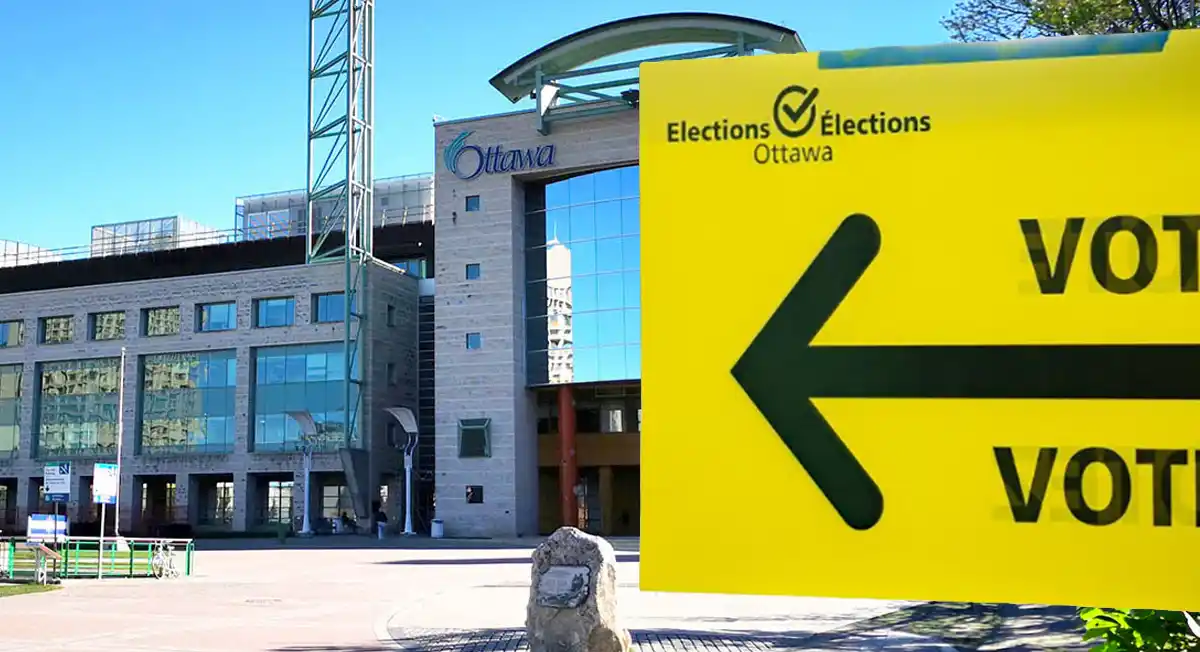
Before heading to the polls on election day, Monday, October 26, 2026, make sure you are on the voting list. Residents can add or amend their information on the Voters’ List from Tuesday, September 1, to Sunday, September 20, at 4:30 p.m., using the “Am I on the Voters’ List?” tool on ottawa.ca/vote.

You can also complete and submit an “Application to add or amend my information on the Voters’ List’ to the City of Ottawa’s Elections Office at 1221 B Cyrville Rd. or at any City of Ottawa Client Service Centre.

After Sunday, September 20, electors can update their information on the Voters’ List at a voting place on voting days.