
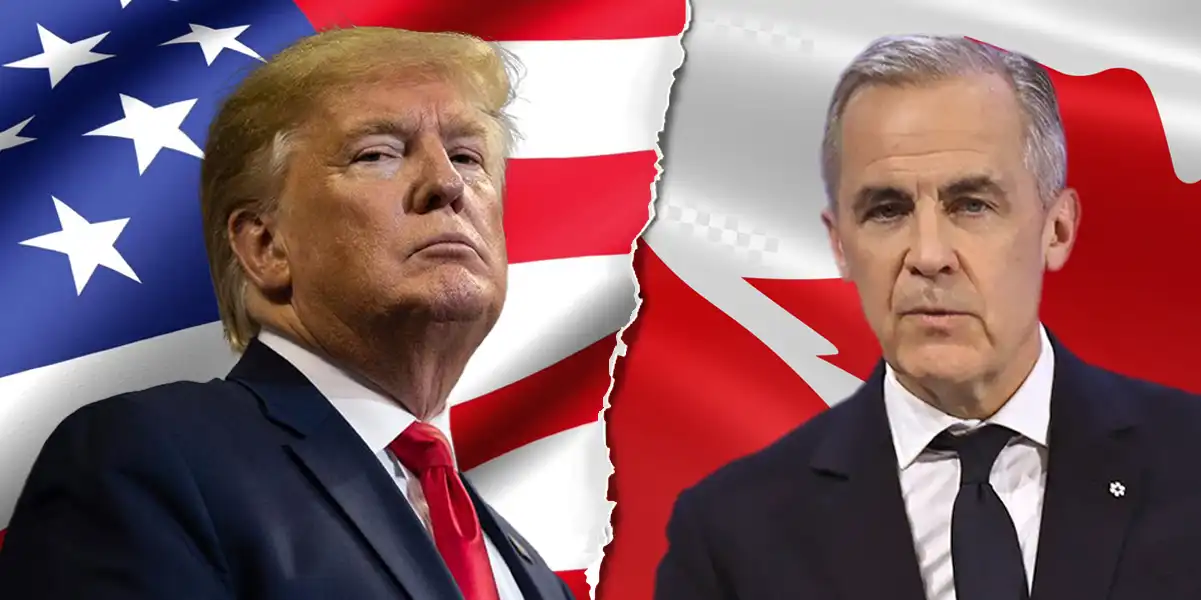
Ottawa’s Tariff Theatre Has Failed: Why Protectionism Is Hurting Canadians

Donald Trump’s tariffs are bad economic policy. They distort markets, disrupt deeply integrated supply chains and impose costs on businesses and consumers on both sides of the border. But acknowledging that reality does not relieve the Canadian government of its responsibility to deal effectively with the American administration that actually holds power. That is where Ottawa has failed.

For months, the Liberal government treated the Canada-U.S. trade dispute partly as an exercise in domestic political theatre. Tough rhetoric played well at home. It also carried an obvious political benefit: confronting Trump helped the Liberals draw a favourable contrast with the Conservatives and reinforced a political narrative that was working for them in the polls. Whether that calculation explicitly drove the government’s strategy or not, the temptation to keep playing a politically successful hand may help explain why pragmatism took so long to replace confrontation.

Canada is now discovering the difference between political positioning and economic strategy. Ottawa is reportedly prepared to discuss concessions involving retaliatory automobile tariffs, dairy quota allocations and the return of American alcohol to provincial stores as it seeks tariff relief. There is nothing inherently wrong with compromise. Negotiation between countries requires it.

The problem is that Canada appears prepared to discuss concessions today that could have formed part of a pragmatic negotiating strategy months ago, before Canadian businesses and workers endured prolonged uncertainty. That raises an uncomfortable question: what exactly did all the posturing accomplish? If these issues were ultimately negotiable, Ottawa should have been negotiating them from the beginning.

The numbers demonstrate why Canada cannot afford political theatre. Statistics Canada reports that 71.7 per cent of Canadian merchandise exports went to the United States in 2025. Exports to the U.S. fell 5.8 per cent that year, while our merchandise trade surplus with the Americans declined from $101.3 billion in 2024 to $81.6 billion in 2025. These are not abstract statistics. They represent Canadian factories, investment, jobs and paycheques.

The broader economic picture should make Ottawa even more cautious. The OECD projects Canadian economic growth of only 1.2 per cent in 2026 and has identified trade tensions and higher U.S. tariffs as important economic headwinds. Canada is therefore negotiating with its overwhelmingly largest customer while economic growth is already weak.

Trump is many things, and Canadians have legitimate reasons to object to his rhetoric and trade policies. But nobody should underestimate his willingness to use American economic power as leverage. He has been remarkably consistent about it. Tariffs are not simply a negotiating tactic for this administration. They have become an instrument of American economic and foreign policy. Canada should have recognized that reality immediately.

Instead, Ottawa behaved as though sufficient indignation, retaliation and international solidarity would eventually force Washington back toward the old trading relationship. That was wishful thinking masquerading as strategy. Other governments recognized that American trade policy had fundamentally changed and began negotiating accordingly. They did not necessarily like the new reality. They simply understood it.

Canada had another disadvantage that should have made pragmatism even more important. The United States is overwhelmingly our most important customer. Our automotive, steel, aluminum, energy, agriculture and manufacturing sectors are deeply integrated into the American economy. Geography cannot be negotiated away, nor can the enormous purchasing power of the American market.

That does not mean capitulation. Canada possesses considerable leverage of its own. We are a major supplier of oil, natural gas, electricity, uranium, aluminum and critical minerals important to the American economy and its national security. We should use that leverage intelligently and unapologetically. But leverage matters only when it is connected to achievable objectives.

The objective should never have been to defeat Donald Trump politically or demonstrate that Canadians could shout as loudly as Washington. It should have been to secure the best possible economic arrangement for Canada. Workers in Ontario manufacturing plants, aluminum producers in Quebec and businesses in British Columbia ultimately bear the consequences when Ottawa gets that calculation wrong.

Political theatre is inexpensive in Ottawa. Economic uncertainty is extraordinarily expensive everywhere else. If concessions on alcohol, automobiles, dairy or other trade irritants can secure meaningful protection for Canadian industries, they should be considered on their merits. But Canadians are entitled to ask why it took months of confrontation to arrive at a negotiating position that should have been considered much earlier.

The lesson is not that Canada must surrender whenever Washington threatens tariffs. Canada needs a harder-headed economic strategy built around leverage, diversification, competitiveness and national interest. We need pipelines and energy infrastructure giving our resources access to more markets, modern ports and trade corridors, and aggressive development of our oil, natural gas and critical minerals. We also need to dismantle interprovincial trade barriers that weaken our domestic economy.

Above all, Canada needs realism. We cannot control who Americans elect or dictate Washington’s trade philosophy, but we can control how intelligently we respond. Donald Trump came to the negotiating table prepared to use American economic power. Ottawa came prepared to make a political statement. Now that the statements have been made and the economic bill is coming due, the government is discovering what should have been obvious from the beginning: in international trade, pragmatism is not weakness. It is strategy.