Remembrance Day: Canada Has Answered the Call Before. We Can Do It Again.
Every Remembrance Day, I think about my grandfather, Hugh Arthur Crombie.
He fought in the First World War and was wounded at Vimy Ridge, one of the defining battles in Canadian history. But his service to Canada did not end when he returned home.
When the Second World War began, he answered his country’s call again. This time, he served as one of Canada’s celebrated dollar-a-year men—business executives who volunteered their expertise to the federal government for a nominal salary. Working in the wartime munitions administration, he helped organize the extraordinary expansion of Canada’s manufacturing capacity to produce the weapons, equipment and ammunition desperately needed by the Allied forces.
His story has always been a source of personal pride. But it is hardly unique.
Across Canada, millions of families have their own connections to Remembrance Day. A grandfather who fought in the trenches. A father who flew bombers over Europe. An uncle who landed at Normandy. A grandmother who worked in a munitions factory. A son or daughter who served in Afghanistan.
These stories remind us that Remembrance Day is not simply about distant historical events. It is about our families, our communities and the sacrifices that helped create the country we inherited.
But this year, as Canada debates dramatically increasing military spending, strengthening its sovereignty and rebuilding its defence industries, I believe Remembrance Day offers another important lesson.
Canada has demonstrated repeatedly that when history demands it, we are capable of extraordinary national mobilization.
A small country makes an enormous sacrifice
When the First World War began in 1914, Canada had fewer than eight million people.
Yet more than 620,000 Canadians served in uniform. More than 66,000 died, and approximately 172,000 were wounded.
At Vimy Ridge in April 1917, all four divisions of the Canadian Corps fought together for the first time. Nearly 3,600 Canadians were killed and more than 7,000 wounded in a battle that became a defining moment in our national history.
At Passchendaele, Canadian soldiers fought through unimaginable conditions. During the Hundred Days Offensive of 1918, Canadian forces helped deliver the victories that brought the war to an end.
Canada emerged from the conflict with greater international recognition and a stronger sense of national identity.
But that achievement came at a terrible human cost.
Barely twenty years later, the country was called upon again.
When Canada entered the Second World War in September 1939, our population was approximately eleven million. Our military was relatively small, and our industrial economy was still recovering from the Great Depression.
Yet within six years, Canada had become one of the most important contributors to the Allied war effort.
More than one million Canadians served. Over 45,000 lost their lives.
Canadian soldiers fought in Sicily and Italy, including the brutal battle of Ortona. Approximately 14,000 Canadians landed at Juno Beach on D-Day, June 6, 1944. Canadian forces played a crucial role in liberating the Netherlands, where their sacrifices remain deeply appreciated.
Our sailors helped protect the Atlantic convoys that sustained Britain and supplied Allied armies.
And Canada’s military expansion was astonishing.
At the beginning of the war, the Royal Canadian Navy had only six destroyers and a handful of smaller vessels.
By the war’s end, it had grown to more than 400 commissioned vessels, becoming one of the world’s largest navies—commonly described as the third-largest Allied navy.
Think about that achievement.
A country of eleven million people developed a naval force capable of helping sustain a global war.
Canada transformed its entire economy
But Canada’s contribution extended far beyond the battlefield.
We became an industrial powerhouse.
Canadian factories produced hundreds of thousands of military vehicles, thousands of aircraft, ships, artillery, ammunition and other essential equipment.
More than 800,000 military vehicles were manufactured in Canada during the war.
Canadian workers also built approximately 430 Avro Lancaster bombers, among the aircraft that formed the backbone of Britain’s strategic bombing campaign.
Shipyards expanded. Factories were converted. New production facilities were built.
Women entered industrial workplaces in unprecedented numbers. Farmers increased production to feed Allied populations and armies. Engineers, scientists, business leaders and workers collaborated to meet seemingly impossible production targets.
People like my grandfather helped organize that transformation.
Canada didn’t simply send soldiers overseas.
We mobilized an entire economy to help win the war.
And we financed that extraordinary commitment.
Canada’s Second World War expenditures amounted to roughly $21 billion to $24 billion in wartime dollars, depending on how costs are measured.
Using a broad consumer-price inflation adjustment, that represents approximately $400 billion to $450 billion today.
The government raised taxes, borrowed extensively and sold Victory Bonds to Canadians. Ordinary citizens helped finance the war through their savings, while businesses redirected capital and production toward the national effort.
The scale of that commitment was extraordinary for a country with such a small population and economy.
Yet Canadians understood that the cost of failing to defend freedom could be immeasurably greater.
From war to peacekeeping—and Afghanistan
After the Second World War, Canada helped establish NATO and became an influential voice in international diplomacy.
In 1956, Lester B. Pearson played a central role in creating the United Nations Emergency Force during the Suez Crisis, an achievement that earned him the Nobel Peace Prize.
Canadian peacekeepers subsequently served in Cyprus, the Golan Heights, the Balkans and numerous other international missions.
Our military tradition became associated not only with fighting wars, but also with preventing them and helping societies recover from conflict.
That commitment continued into the twenty-first century.
Following the terrorist attacks of September 11, 2001, Canada stood alongside the United States and its NATO allies in Afghanistan.
Between 2001 and 2014, more than 40,000 Canadian Armed Forces members served in Afghanistan.
One hundred and fifty-eight Canadian military personnel lost their lives. Canadian civilians also died.
Our soldiers fought difficult battles in Kandahar, trained Afghan security forces and supported reconstruction efforts.
Whatever one’s assessment of the eventual outcome of that mission, there can be no questioning the courage, commitment and sacrifice of the Canadians who served.
And that history deserves particular attention today.
Canada has earned its place as an ally
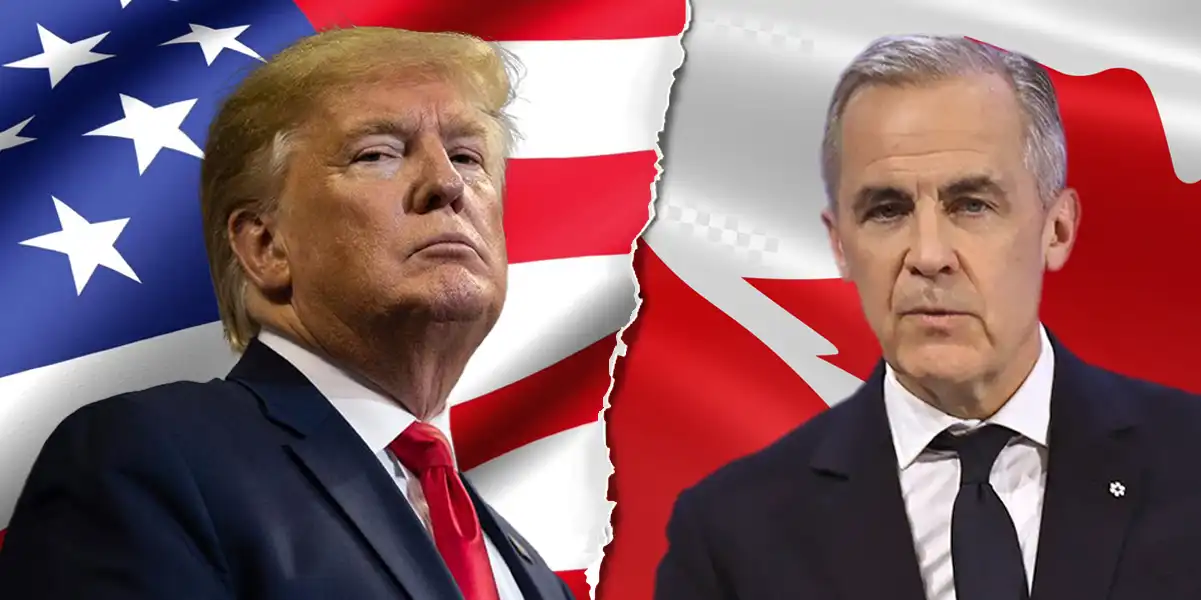
At a time when Canada and the United States face serious tensions over trade, tariffs, defence spending and sovereignty, we should remember the extraordinary history of our partnership.
Canada has never been merely a passive beneficiary of American military protection.
We fought alongside American forces in two world wars, Korea and Afghanistan. We helped establish NATO. We have contributed to continental defence through NORAD and maintained a long-standing commitment to international security.
When the United States was attacked on September 11, Canada answered the call.
Our soldiers fought alongside Americans. Canadian families made enormous sacrifices. And 158 Canadian military personnel never came home from Afghanistan.
These sacrifices should not be forgotten in contemporary debates about whether Canada has contributed enough to collective security.
At the same time, history should not become an excuse for complacency.
Canada’s past achievements do not eliminate our responsibility to prepare for the future.
The challenge facing Canada today
Canada is once again confronting difficult questions about its military capabilities, industrial capacity and national sovereignty.
We face growing security challenges in the Arctic, geopolitical instability, threats to international trade and uncertainty about the reliability of traditional alliances.
We are discussing substantial increases in defence spending, new military equipment, stronger domestic supply chains and investments in Canadian defence manufacturing.
These commitments will require tens of billions of dollars.
And Canadians are understandably asking how we can afford them while also addressing housing, healthcare, infrastructure and other pressing priorities.
Those are legitimate questions.
But history offers an important perspective.
During the Second World War, Canada didn’t simply purchase military equipment from other countries.
We developed the industrial capacity to manufacture much of what was needed ourselves.
We invested in factories, shipyards, engineering expertise and skilled workers.
We created industries, trained people and developed capabilities that contributed to Canada’s postwar prosperity.
The lesson for today is that defence spending should not simply be an expense. Properly directed, it can also be an investment in Canadian industrial capacity, innovation, productivity and economic sovereignty.
We should be asking how new defence expenditures can strengthen Canadian manufacturing, aerospace, shipbuilding, cybersecurity, artificial intelligence and advanced technologies.
How can we create skilled jobs and build companies that will remain competitive long after particular military procurement programs have ended?
How can we use defence investment to strengthen the country’s economic independence?
And how can we ensure that Canadian taxpayers receive not only military security, but lasting economic benefits?
These are questions worthy of the same national ambition that transformed Canada during the Second World War.
The greatest tribute is to build a country worthy of their sacrifice
None of this should be interpreted as glorifying war.
Quite the opposite.
Remembrance Day exists because war is terrible, and because the human cost of defending freedom is so profound.
We remember those who died precisely because we understand the value of peace.
But peace requires more than good intentions.
It requires diplomacy, credible defence capabilities, strong alliances and the willingness to defend democratic institutions and fundamental freedoms.
My grandfather’s generation understood that.
Hugh Arthur Crombie served his country in the trenches of the First World War and again through the industrial mobilization of the Second.
His story reminds me of the millions of Canadians whose names may never appear in history books, but whose contributions helped build our country.
The soldiers, sailors and airmen.
The nurses and medical personnel.
The factory workers and farmers.
The business leaders and engineers.
And the families who waited, worried and mourned.
They demonstrated what Canada could accomplish when people united around a common purpose.
I have long believed in what I call the Power of Co: cooperation, commitment, courage, compassion and community.
Those qualities helped Canada survive two world wars, contribute to international peacekeeping and stand alongside our allies in Afghanistan.
And they remain essential to our future.
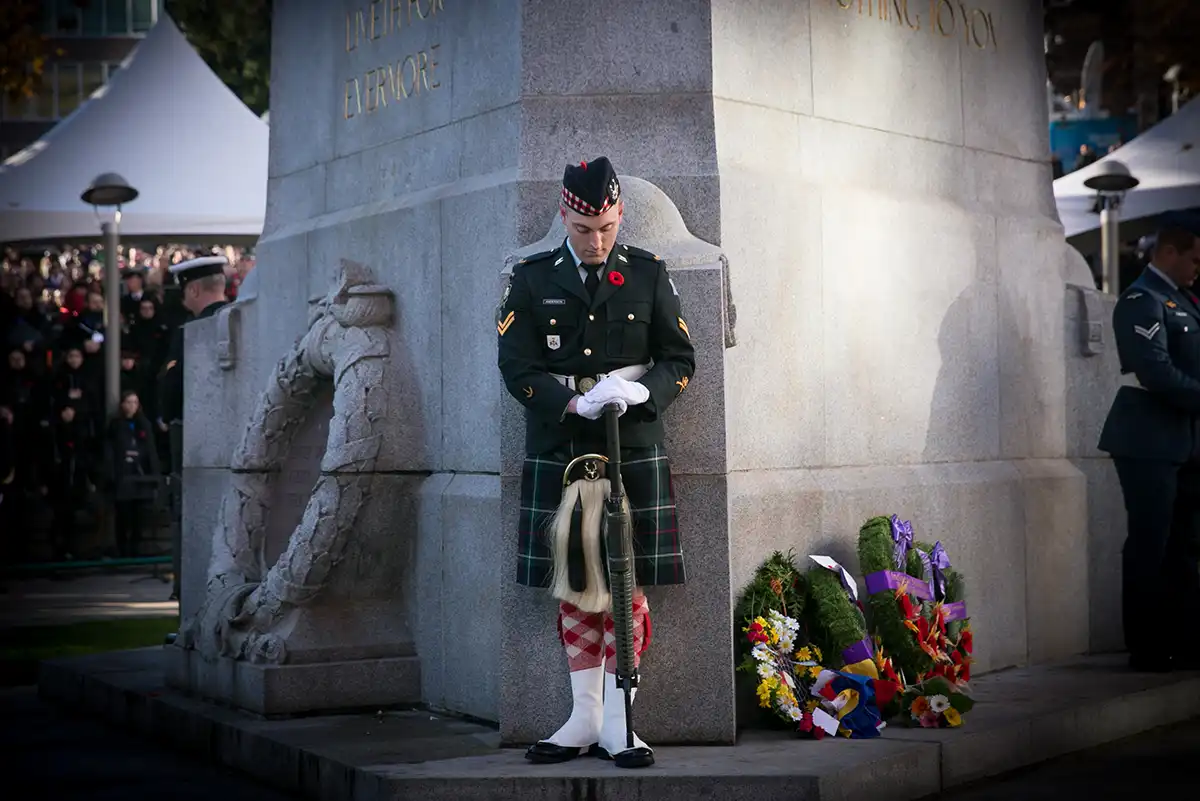
On this Remembrance Day, we should honour those who served, remember those who never returned and support those who still carry the wounds of war.
But we should also remember what their generation taught us about national purpose.
Canada has answered history’s call before. We have mobilized our people, our industries and our resources to accomplish things that once seemed impossible.
As we confront the challenges of a changing world, we must rediscover that same ambition.
Not because we seek war, but because we value peace.
Not because we want confrontation, but because we understand the importance of sovereignty.
And not simply to honour Canada’s past, but to build a country worthy of the sacrifices that made our future possible.
Lest we forget.
Brian Crombie is a corporate executive, commentator and host of The Brian Crombie Hour on Sauga 960 AM.