Sovereignty Requires Strength at Home: A Vision for Canada–U.S. Relations

Last week, Pierre Poilievre delivered his clearest articulation yet of how a Conservative government would navigate the present rupture in Canada–United States relations. It was not a speech about grievance. It was a speech about sovereignty.

For months, our debate has oscillated between two temptations. One is theatrical outrage at Donald Trump. The other is strategic drift dressed up as global repositioning under Mark Carney. Neither is adequate to the moment.

Canada does not control the occupant of the White House. We do control whether we remain fragile. Poilievre stated a basic geopolitical truth: Canada’s prosperity and security are inseparable from a stable relationship with the United States.

We sell roughly twenty times more to America than to China. Our supply chains are integrated. Our defence architecture is integrated. Our geography is permanent. Nations cannot relocate. The suggestion that China can substitute for the United States is not strategy. It is wishful thinking.

That does not require deference to Washington. President Trump’s tariffs on steel, aluminum, autos and lumber are economically wrong. His rhetoric about Canada as a “51st state” is unserious. But indignation is not a policy. Poilievre’s central proposition is more disciplined: leverage abroad begins with strength at home. He is right.

For three quarters of a century after the Second World War, Canada operated inside an unusually stable geopolitical environment. We underinvested in defence. We allowed permitting regimes to metastasize. We tolerated mine approvals that stretch close to two decades. We made it easier to subsidize than to build. Then volatility returned.

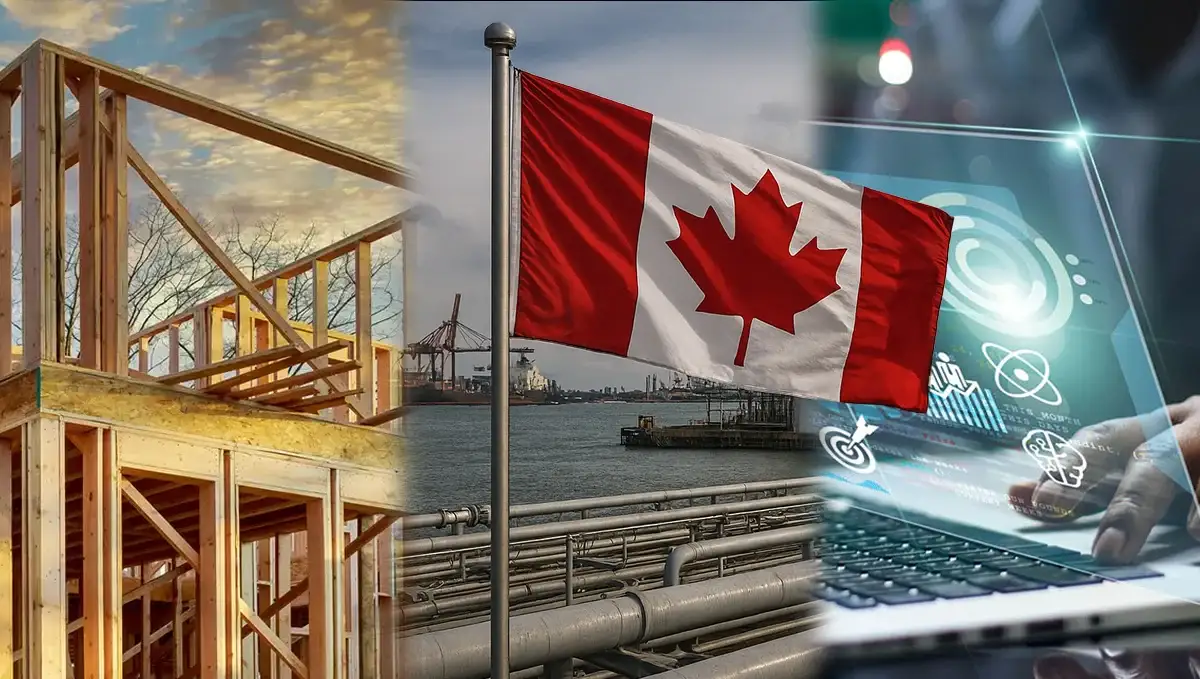
Poilievre’s four pillars: energy abundance, homebuilding, defence capability and digital sovereignty; are not ideological slogans. They are instruments of state capacity.

Abundant low-cost energy strengthens the dollar and purchasing power. Rapid permitting expands GDP and fiscal resilience. Military readiness restores deterrence credibility. Retention of intellectual property preserves long-term economic rents. Structural strength determines negotiating leverage. Speeches do not.

On China, the speech struck the correct balance. Engage where prudent. Trade where beneficial. But do not confuse engagement with dependence.

Canada has experienced hostage diplomacy, intellectual property theft and election interference. These are not abstractions. At the same time, reflexive hostility serves no one. Poilievre’s rejection of a strategic realignment toward Beijing is not ideological rigidity. It is realism. Diversification is wise. Substitution is not.

Critics note that many Canadians recoil from Trump’s volatility and therefore gravitate toward Carney’s rhetorical steadiness. That instinct is understandable.

But calm language is not the same as economic performance. Canada remains less affordable than it was a year ago. Housing supply remains constrained. Productivity growth remains weak.

The Conservative challenge is twofold: reject Trump’s excesses without importing his style, and present reform as disciplined execution rather than populist turbulence.

Poilievre came closer to threading that needle than his critics admit. He rejected annexation rhetoric. He acknowledged American goodwill. He proposed an all-party working group for the upcoming trade negotiations under the Canada-United States-Mexico Agreement (CUSMA). That is institutional seriousness.

The review of CUSMA will be the first real proving ground. Seeking elimination of sectoral tariffs, a tariff-free auto pact, Buy America exemptions and a revival of Keystone is ambitious. But ambition grounded in leverage differs from ambition grounded in hope.

Canada has leverage: We are America’s second-largest customer. We produce the majority of NATO critical minerals. We sit astride the Arctic approaches to the continent. The question is whether we repair our domestic weaknesses quickly enough to convert these assets into bargaining power.

A country that approves projects in six months rather than six years negotiates differently. A country that fields credible Arctic capability negotiates differently. A country that retains ownership of its innovation negotiates differently. Sovereignty is not declared. It is constructed.

The deeper contrast in our politics is not Liberal versus Conservative. It is talk versus action. Carney speaks fluently of rupture and global alliances. Poilievre speaks of permits, pipelines, procurement and intellectual property retention. One frames the international system. The other focuses on institutional throughput.

At this stage of our national life, throughput may matter more. Canada cannot control Washington. It cannot control Beijing. It cannot control global shocks. But it can control whether it builds.

If Poilievre’s framework becomes a disciplined program of execution, it deserves serious consideration. If it degenerates into grievance politics, it will fail. The electorate will not ultimately judge tone. It will judge results. Canada must choose capacity over choreography.

And then get to work.

Photos: iStock and Copilot