Ten Years After Nice: The Freedom to Speak Clearly and Candidly Must be Exercised

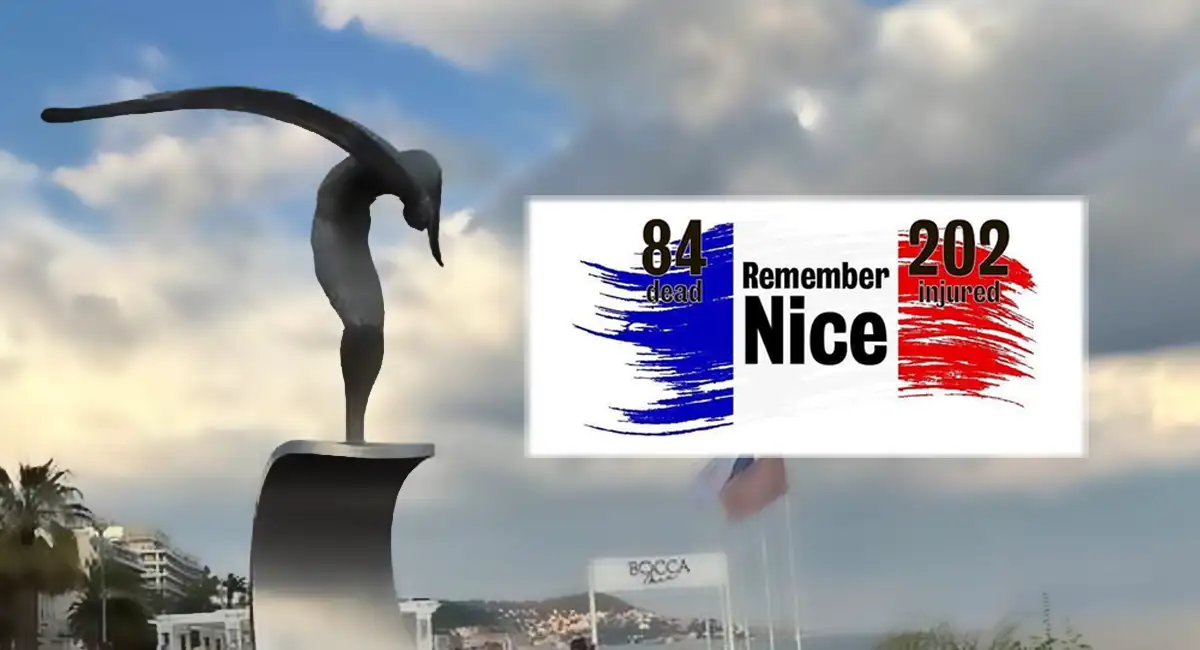
Ten years ago, on July 14, 2016, the world watched in horror as a jihadist terrorist drove a truck through the crowds celebrating Bastille Day in Nice, murdering 86 innocent people and wounding some 450 more. It was an assault not only on human life, but on the very ideals of liberty, democracy and civilization that France’s national day represents.

In the days and months that followed, something important began to change. For too long, too many political leaders and opinion makers had hesitated to call the enemy by its name. They spoke in euphemisms, avoided identifying the ideology that inspired these atrocities, and too often treated jihadist terrorism as a series of isolated crimes rather than as part of a sustained assault on free societies.

The massacre in Nice became one of the events that accelerated a long-overdue shift. Gradually, democratic leaders, military commanders, intelligence officials and scholars became more willing to speak plainly about Islamist extremism, jihadist terrorism and the ideological movements that sought to undermine liberal democracy. Clarity, once regarded as controversial, increasingly came to be understood as a prerequisite for effective policy.

That clarity matters because free societies cannot defeat an enemy they refuse to define. Honest language is not an act of intolerance; it is the beginning of sound strategy. As former CIA Director R. James Woolsey observed at the time, “It is important to call things as they are. Without that, we cannot marshal the strength of free peoples to victory.”

A decade later — in this post-Oct. 7 era — we know that military victories alone do not end ideological wars. The so-called Islamic State lost the territory of its self-declared caliphate, yet the ideology that inspired Nice and other horrors continues to recruit followers, inspire lone actors and destabilize societies. The struggle has therefore become broader than a battlefield. It is a contest over ideas, values, civic confidence and the willingness of democratic nations to defend their institutions.

Nor has experience vindicated those who argued that moral ambiguity would reduce the threat. Appeasement has never persuaded fanatics to abandon their cause. Democracies remain strongest when they combine moral confidence with fidelity to the rule of law—protecting both national security and the civil liberties that distinguish free societies from the tyrannies they oppose.

The victims of Nice and Nova deserve to be remembered not merely as casualties of another terrorist attack, but as symbols of the price paid when civilization is confronted by ideological hatred. Their memory challenges us to remain vigilant without surrendering our principles, resolute without abandoning justice, and courageous without sacrificing compassion.

If the past decade has taught us anything, it is that freedom cannot survive on complacency. It requires citizens prepared to defend democratic institutions, governments willing to enforce the law without fear or favour, and leaders prepared to speak honestly about the threats confronting their societies.

The torch of liberty has always burned brightest when tested by darkness. The men, women and children murdered in Nice and after did not choose to become symbols of that truth. Yet their memory reminds us that freedom is never self-sustaining. Each generation must renew its commitment to it.

Ten years later, our obligation remains unchanged: to defend liberty without apology, to confront hatred without illusion, and to ensure that those who seek to terrorize free peoples never succeed in extinguishing either our resolve or our hope. 


Beryl P. Wajsman, B.C.L.,LL.B.,KCR is President of the Institute for Public Affairs of Montreal

Photo: Courtesy Beryl P. Wajsman