The GTA Housing Crisis Isn’t a Downturn — It’s a System Failure

Toronto’s housing market isn’t simply cooling. It’s undergoing a fundamental reset — one that will determine whether the region becomes more livable or even less affordable in the years ahead.

For more than a decade, the Greater Toronto Area relied on a model that looked successful on the surface but was quietly becoming unsustainable. Cheap money, rising prices, and relentless investor demand fuelled a boom in pre‑construction condos. Units were sold not to people planning to live in them, but to investors betting on appreciation. Assignments, flipping, and paper gains became normalized.

As long as prices rose, the system appeared to work. But it was drifting away from its core purpose: building homes for people.

Now, with higher interest rates, weakened investor demand, and thousands of units entering a softer market, the flaws in that model are impossible to ignore. We didn’t just overbuild — we built the wrong kind of housing.

Too many small, investor‑oriented units. Too few family‑sized homes. Too few purpose‑built rentals. Not enough housing designed for long‑term living. This isn’t a temporary imbalance. It’s a structural failure, and it requires a structural response.

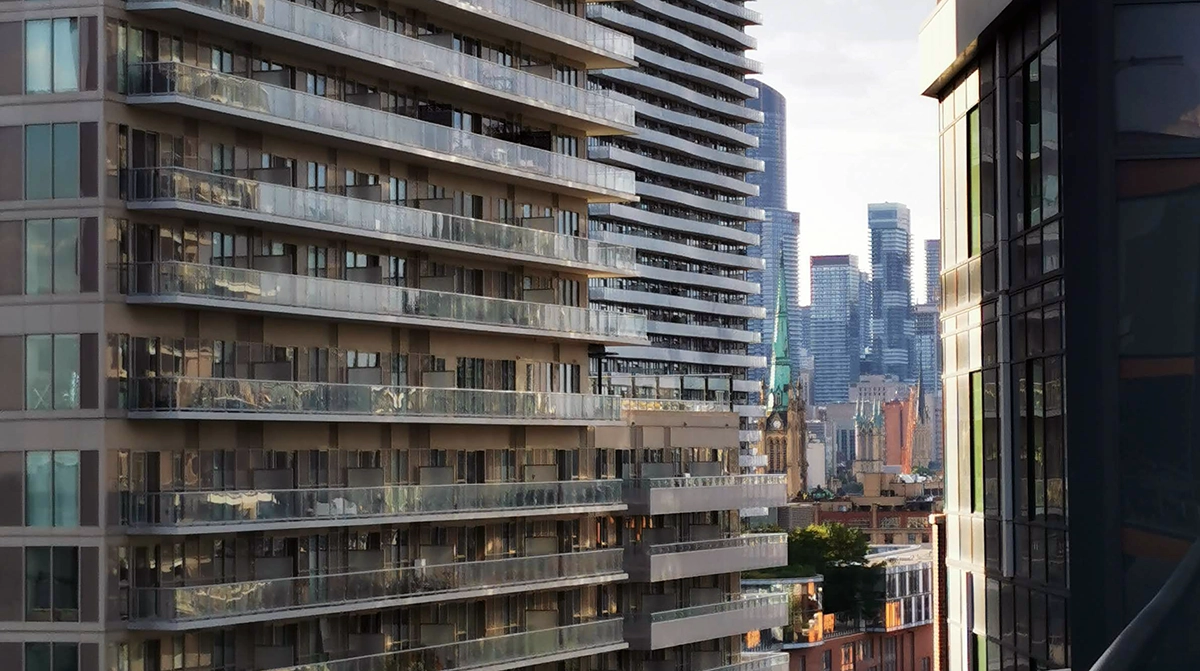
The first step is rethinking what we build and where we build it. For too long, Toronto’s default solution has been the same: tall towers filled with small units. But cities aren’t built on repetition — they’re built on livability. That means more mid‑rise housing, more family‑friendly units, and neighbourhoods designed around walkability, transit, public space, and local retail. Housing policy should aim not only to increase supply, but to create communities where people actually want to live.

Second, we need to shift from a speculative housing model to a long‑term one. That means prioritizing purpose‑built rental and encouraging developers to build for ownership and operation over decades, not for quick resale. When housing is treated as a long‑term asset rather than a short‑term trade, the incentives change. Quality matters more. Durability matters more. Residents matter more. This is essential if we are serious about affordability and stability.

Third, governments must stop treating housing as a revenue source. Development charges, fees, taxes, and regulatory delays have piled up to the point where they undermine the viability of building new homes — especially in the middle of the market, where they are needed most. When high charges, HST, parkland levies, financing costs, and multi‑year approval timelines collide, many projects simply no longer make economic sense. And when it doesn’t make sense to build, housing doesn’t get built.

Reducing these costs and accelerating approvals are not giveaways to developers. They are necessary steps if we want more supply and improved affordability.

Fourth, we need to protect the people who actually build our homes. The current slowdown is already leading to layoffs across the construction sector. Skilled tradespeople are leaving. Apprenticeship pipelines are weakening. If this continues, we risk losing the capacity to build just as future demand returns. Housing is not just a policy issue — it is an industrial capability. And once that capability is lost, it is difficult and expensive to rebuild.

Finally, we need a dose of realism. Land values need to be adjusted. Expectations need to be reset. Some projects will not proceed. Others will need to be redesigned — from high‑rise to mid‑rise, from condo to rental, from investor‑focused to end‑user‑focused. This is not failure. It is a necessary adaptation.

Because housing is not just an asset class. It is where people live, raise families, and build their lives. It underpins economic mobility, community stability, and the overall health of our cities.

The goal should not be to revive the speculative model of the past decade. It should be to build a better one — a housing system that prioritizes people over speculation, rewards good design, and makes it economically viable to build the kinds of homes we actually need.

Toronto and the GTA more broadly face a clear choice. We can wait and hope the old model comes back. Or we can recognize that it no longer works and use this moment to build something better.

If we choose the latter, this reset won’t be remembered as the moment the housing market faltered. It will be remembered as the moment we finally started to fix it.

Photo: OLM staff