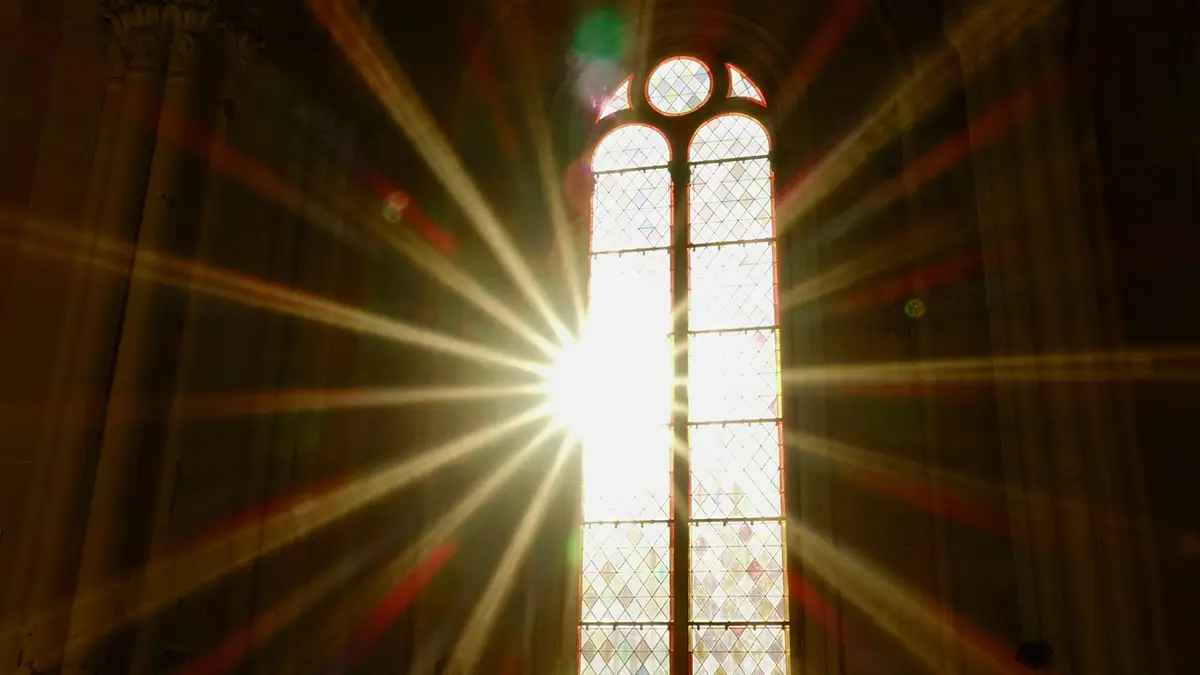
The Hallelujah Effect: What a church choir taught me about leadership.


Renewal Is Not a Miracle — It’s a Process

I was sitting in church last week, listening to the readings and the sermon, when something unexpected happened. I found myself remembering an old camp song: “Dem bones, dem bones, dem dry bones…”

It’s a simple song—almost childlike—but in that moment, it reframed two powerful passages of scripture in a way I hadn’t considered before. The first was from the Book of Ezekiel: the vision of the valley of dry bones, a field of lifeless fragments coming back together, bone by bone. The second was from the Gospel of John: the story of Lazarus, raised from the dead after four days.

At first glance, both are stories about life returning where there was none. But they are not telling the same story.

In the older Jewish tradition, the vision of dry bones is not primarily about individuals; it is about a community that feels broken, scattered, and without hope. It describes the slow, difficult process of restoration—connection by connection, piece by piece. The story of Lazarus is different. It is immediate and dramatic: a single man called back to life by a single command.

That difference matters more than we realize because we live in a world obsessed with “Lazarus moments.”

We are constantly looking for the breakthrough—the quick fix, the decisive leader, or the one “disruptive” idea that will suddenly bring everything back to life. In business, in politics, and in our personal lives, we chase the most confident voice, hoping it will solve everything. But real renewal rarely works that way.

We keep looking for a strong leader to impose order instead of doing the harder work of building alignment. While authoritarian leadership promises speed, it rarely delivers lasting vitality. That instinct shows up everywhere; when things feel uncertain, we narrow the conversation and limit the voices, trying to move faster by listening to fewer people.

That is often when we make our worst decisions.

Real renewal doesn’t come from narrowing perspectives; it comes from expanding them. It requires bringing the whole team to the table, including the “unusual” voices who challenge assumptions and see risks others miss. Yes, that process is slower. It can be uncomfortable, involving disagreement and tension. But that tension is not a problem—it is the work.

There is another dimension to this as well. Sometimes the problem isn’t just that we’re looking for quick fixes; it’s that we’re solving the wrong problem entirely. As Fareed Zakaria has noted in discussions of modern warfare, some countries are still fighting with the tools of the last generation—expensive, complex systems—while others have adapted to a new reality of flexible, cheaper technologies. It raises a broader question: how often are we trying to solve today’s problems with yesterday’s thinking?

If you’re fighting the last war, you’re already losing the next one.

We can see this much closer to home in the Toronto condo market, which is currently in a deep freeze. Some developers are still trying to build the same product—large towers with tiny units—designed for a market that no longer exists. That, too, is fighting the last war. In a condo market, you sell a unit once, often based on a drawing. But in a purpose-built rental market, you are effectively reselling that unit year after year. It has to be livable. It has to have staying power.

If you’re building for yesterday’s market, you’re not building for tomorrow’s reality.

This brings me back to something more personal. This Easter, I made a slightly foolish decision: I joined the choir for the Hallelujah Chorus. As a tenor, I quickly discovered how challenging that can be. You’re trying to hold your line while sopranos, altos, and basses sing around you—sometimes echoing, sometimes clashing. It’s messy, and at times, it feels like it shouldn’t work at all.

But then something happens. When everyone holds their line, listens, and aligns, it becomes something extraordinary. Real alignment doesn’t sound like one voice. It sounds like harmony. Up close, it can feel chaotic, but from a distance, it becomes coherent, even elegant.

And that, perhaps, is what renewal really looks like. Not a miracle, not a single decision, and not one voice taking control—but people finding their place, holding their line, and reconnecting with one another. Bone by bone. Voice by voice. Until something that once felt scattered begins to live again.

Photo: iStock