Recommended Articles

Get Lost in Shipwrecked with the Company of Fools
Sheepdogs & Dragons

Men I Trust Run Their Own Show



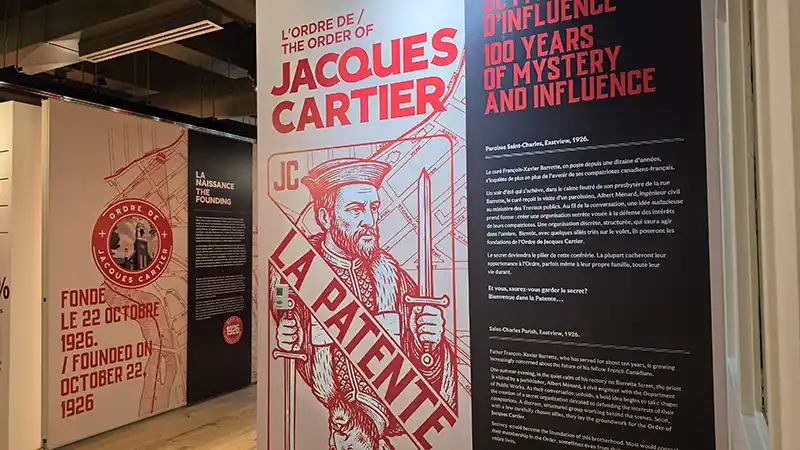
A new Ottawa exhibition explores the organization founded in Eastview in 1926 to defend French-Canadian interests and strengthen Francophone influence in Canada.
In 1926, Eastview, now known as Vanier, was a predominantly Francophone community whose residents faced barriers in public life. Three local men believed that protecting French-Canadian interests required collective action and a carefully organized network. Their response was the Ordre de Jacques Cartier, a secret organization that would become known across the country by its popular nickname, La Patente.
Nearly a century later, Vanier Museopark is revisiting this little-known chapter of Canadian history with The Order of Jacques Cartier: 100 Years of Mystery and Influence. Opening to the public on October 30, 2026, the exhibition invites visitors to step back in time to a story in which secrecy was everything. Visitors will discover the Order’s codes, rituals and secrets, as well as its role in defending Francophone interests in Canada.
On October 22, 1926, Father François-Xavier Barrette, civil engineer Albert Ménard and Émile Lavoie laid the foundations of the Order at Saint-Charles Parish in Eastview. At the time, French Canadians faced disadvantages in the federal public service, while their educational rights were under threat in parts of the country.
The founders set out to unite influential French Canadians to defend their community’s interests and improve its position in public life. Members operated through coded signs, passwords and rituals, organizing themselves into local groups known as commanderies. For many, membership remained a lifelong secret.
“This exhibition allows us to share an important part of our local history and highlight the role played by those who mobilized to defend the interests of the Francophone community,” said Yves Turbide, Executive Director of the Vanier Museopark.
The Order’s history reflects a period when Francophone Canadians sought ways to protect their language, expand their opportunities and ensure their community had a stronger voice in Canadian institutions. Its methods were unusual, but the challenges that prompted its creation were very real.
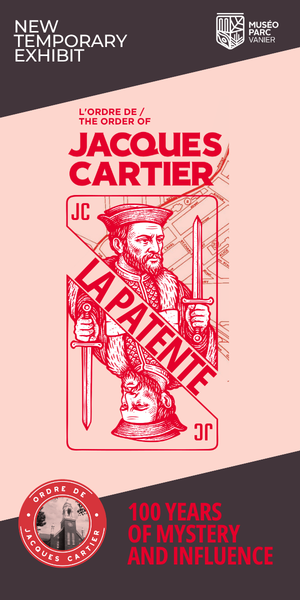
Visitors will have an opportunity to explore how the Order functioned, including the codes and rituals that governed membership and the process through which new members were initiated. These details help bring an organization that deliberately operated out of public view into clearer focus.
“Beyond the mystery surrounding the Order, its codes and rituals reflect a distinctive way of organizing and operating. The exhibition helps the public better understand how the Order functioned and the historical context in which it emerged,” said Yanick Labossière, Curator of the Vanier Museopark.
The exhibition also puts this history in a local context. Ottawa’s story is often told through Parliament, federal institutions and national political figures. Yet communities such as Eastview helped shape the capital’s cultural identity through their own institutions, associations and efforts to preserve their language and traditions.
By tracing the Order’s origins in Eastview, the exhibition offers a different perspective on how local initiatives can connect to broader social and political movements.
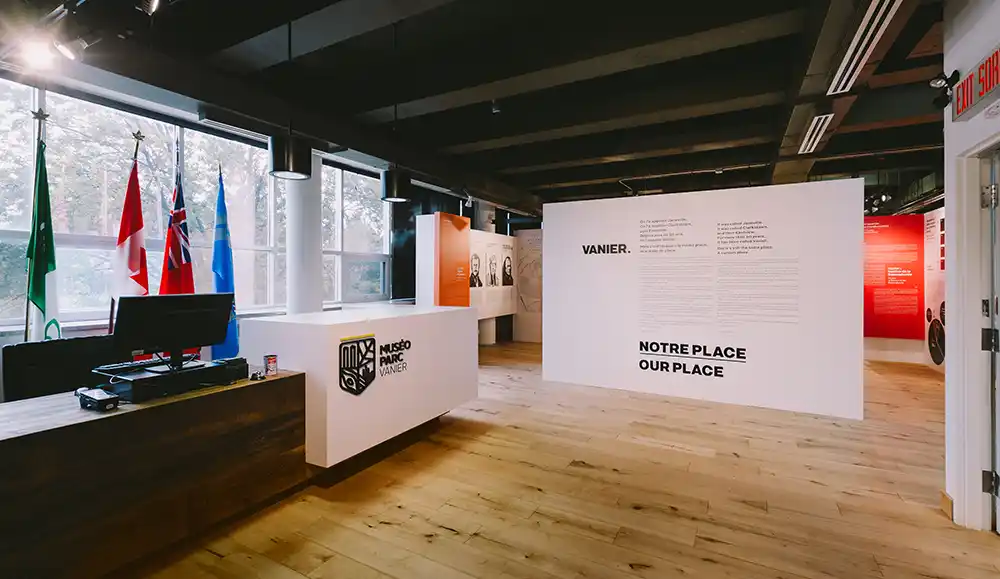
Established in 2004, Vanier Museopark is the only French-language museum in Ottawa and one of the few museums in Canada outside Quebec devoted entirely to Francophone history and culture. Located on the second floor of the Richelieu-Vanier Community Centre, it preserves and interprets the history of Vanier and the wider Franco-Ontarian experience.
Its permanent exhibition, Vanier. Our Place., traces the neighbourhood’s development and highlights the people, institutions and struggles that helped shape its identity. Through its exhibitions, workshops, school programs, interpretive tours, and diverse public programming, it invites people of all ages and cultural backgrounds to discover the history, traditions, and heritage of the local Francophone community.
The Museopark operates an authentic sugar shack in the heart of an urban maple forest, the only one of its kind in Canada. It also hosts the Sugar Festival, an annual event that promotes maple syrup culture, showcases Franco-Ontarian and Indigenous artists, and offers a wide range of popular family activities.
The Ordre de Jacques Cartier exhibition builds on that mission, bringing a significant yet often overlooked part of Francophone history to a wider audience.
“This exhibition reflects the Museopark’s mission to preserve and share our Francophone heritage, bringing to light a little-known chapter of history and its lasting impact on our community,” said Soumia Hamitou, Marketing and Communications Manager at Vanier Museopark.
The exhibition will be inaugurated on October 29, 2026, and open to the public from October 30 until spring 2028. It is located at Vanier Museopark, 300 des Pères-Blancs Avenue, second floor, Ottawa. Admission fees apply.
For visitors unfamiliar with the Ordre de Jacques Cartier, the exhibition offers an introduction to an important chapter of Canadian history. For those who know Vanier, it reveals how their neighbourhood became the birthplace of an organization dedicated to defending French-Canadian interests across the country.
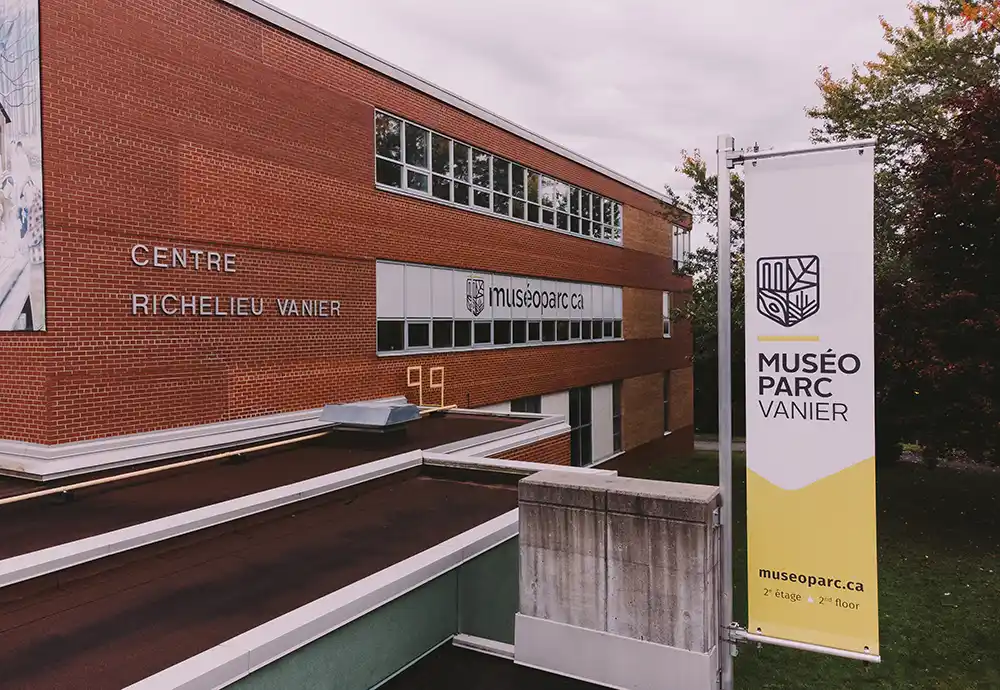
The Order of Jacques Cartier: 100 Years of Mystery and Influence opens to the public on October 30, 2026, following an inauguration on October 29. The exhibition will run until spring 2028 at Muséoparc Vanier.
Location: Vanier Museopark, second floor, Richelieu-Vanier Community Centre, 300 des Pères-Blancs Avenue, Ottawa, Ontario K1L 7L5.
Hours: Tuesday to Saturday, 10 a.m. to 4 p.m. The museum is closed Sundays, Mondays, and statutory holidays.
Admission: Fees apply. Check the museum’s website for current rates and visitor information.
Website: museoparc.ca
Email: info@museoparc.ca
Telephone: 613-842-9871