Vietnam’s Next-Generation Financial Gateway to Asia

Why the Vietnam International Financial Centre is emerging as a strategic opportunity for first movers


By Ha Linh Pham

At pivotal moments in economic history, the most compelling opportunities rarely appear when a market is already mature. They emerge earlier — when a new growth architecture is being built, when institutions are taking shape, and when first movers still have room to define the future. Vietnam is now at that moment.

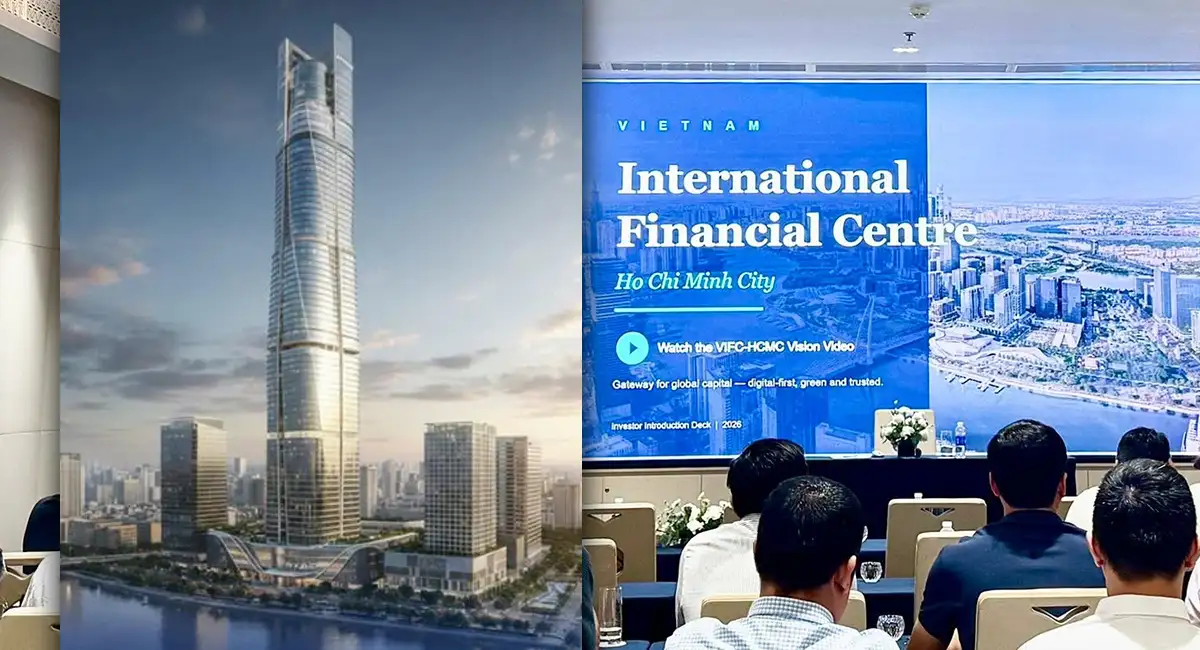
The launch of the Vietnam International Financial Centre (VIFC) marks a strategic step in the country’s ambition to become a regional hub for capital, technology and knowledge. Designed as “one centre, two destinations” in Ho Chi Minh City and Da Nang, VIFC is more than a new financial platform. It is a national institutional project aimed at attracting international capital, advanced financial technologies and world-class talent.

As global capital flows are being reshaped and the centre of economic gravity continues to move toward the Asia-Pacific, Vietnam is positioning VIFC as a next-generation financial gateway. Its purpose is clear: to help Vietnam move from being primarily a destination for investment to becoming a connector, allocator and creator of financial value across the region.

After nearly four decades of Doi Moi, Vietnam has become one of Asia’s most dynamic economies. Its manufacturing base is expanding, exports remain resilient, and international integration is deepening through an extensive network of free trade agreements. But the next stage of development requires more than production capacity. It requires a modern financial system capable of mobilising and directing capital at regional and global scale.

Under the leadership of the Communist Party of Vietnam and the strong direction of General Secretary To Lam and Prime Minister Le Minh Hung, VIFC has been identified as a strategic institutional breakthrough – one designed to create a new growth engine for Vietnam’s next phase of development.

A new pillar of Vietnam’s global financial integration

The establishment of VIFC reflects a major shift in Vietnam’s development model. The country is no longer focused solely on attracting capital. It is preparing to participate more actively in connecting and shaping capital flows.

The experience of Singapore, Hong Kong and Dubai shows that the greatest value in a financial centre is often created during its early formation. Investors and institutions that enter early can gain long-term advantages as the ecosystem expands, deepens and becomes more closely connected to global markets.

Vietnam has strong foundations for such a centre: a population of nearly 100 million, a fast-growing middle class, political stability, competitive growth, and deepening economic links with major global markets.

For international investors, VIFC is therefore not simply another market-entry opportunity. It is a chance to participate in a long-term growth cycle while the institutional architecture is still being shaped.

At a meeting with the Ministry of Finance and relevant agencies on June 2, 2026, Prime Minister Le Minh Hung called for the International Financial Centre to move into substantive operation as soon as possible. He also requested continued work on breakthrough mechanisms to ensure that Vietnam’s investment environment is internationally competitive.

The message is significant. VIFC has moved beyond concept and policy design. It is entering implementation, backed by strong political commitment.

Vietnam’s vision is to build a financial centre that is smart, digital and green. VIFC will be developed around digital technology, green finance, fintech, artificial intelligence and the data economy. This is the profile of a new-generation financial centre – more agile, more technology-driven and better adapted to the fast-changing global economy.

The Prime Minister has also stressed the need to develop distinctive financial products and services. These include green finance, international trade finance, capital mobilisation for large-scale infrastructure, fintech solutions and cross-border financial services for global investors.

One centre, two destinations

VIFC’s defining feature is its “one centre, two destinations” model.

Ho Chi Minh City will serve as the international capital market hub. As Vietnam’s economic engine, with a vibrant business ecosystem and the emerging Thu Thiem financial district, the city is expected to become a gateway for cross-border capital transactions, initial public offerings, mergers and acquisitions, and international bond issuance.

Da Nang will focus on green finance and innovation. Its priorities include fintech, artificial intelligence, blockchain, data centres and sustainable financial products. With modern digital infrastructure and a high-quality living environment, Da Nang is well placed to attract international experts, financial technology firms and research-based innovation teams.

The two cities are not designed to compete. They are intended to complement each other. Together, they create a flexible national platform able to respond to new trends in global finance.

Already, VIFC has recorded nearly USD 10 billion in committed capital for infrastructure, data and financial services. This early signal reflects growing confidence among international investors in Vietnam’s long-term prospects.

Institutions, incentives and investor confidence

No international financial centre can succeed without trust. That trust depends on transparency, stability and predictability.

VIFC will operate under a dedicated legal framework established through specialised decrees of the Government of Vietnam. The aim is to create an internationally competitive institutional space while maintaining transparency and systemic safety.

Vietnam’s decision to apply international standards such as IFRS and Basel, together with sandbox mechanisms for innovation, shows its intention to integrate more deeply into global financial governance. At the June 2 meeting, Prime Minister Le Minh Hung also called for supervisory and risk-management mechanisms aligned with international standards – a critical requirement for global financial institutions considering long-term commitments.

VIFC’s incentive framework is among the most competitive in the region. Priority projects in fintech, green finance, artificial intelligence, semiconductors and data centres may benefit from a corporate income tax rate of 10 percent for 30 years, along with extended tax exemptions and reductions. Other qualifying projects may receive a 15 percent rate for 15 years, still highly attractive by regional standards.

Yet tax incentives are only part of the story. The broader policy message is more important: Vietnam is prepared to share long-term value with investors and accompany them throughout the life cycle of their projects.

The country is also placing strong emphasis on talent. Exemptions from personal income tax for experts, scientists and senior executives in the early operating period are designed not only as financial incentives, but also as a signal that Vietnam values knowledge and expertise.

Golden Visa and Talent Visa programmes, with terms of up to 10 years, streamlined procedures and a clear path toward permanent residence, further strengthen Vietnam’s appeal as a destination for global professionals seeking new opportunities in Asia.

A financial ecosystem for a new growth era

VIFC is not being built merely to attract capital. It is being designed to create a complete financial ecosystem.

The centre is expected to bring together investment banks, funds, technology companies, fintech firms, data centres and service providers. It will serve as a platform for mobilising and allocating resources to strategic projects in Vietnam and the wider region – from transport infrastructure and renewable energy to digital transformation and high technology.

Sustainable finance is central to this vision. Green finance, ESG investment and energy transition are priority areas, consistent with Vietnam’s net-zero commitment and the direction of global capital markets.

This gives VIFC a broader role. It is not only a marketplace for financial transactions. It is an institutional platform for Vietnam’s next growth model – one that connects capital with innovation, technology with sustainability, and national development priorities with international investment flows.

A first-mover moment

For the international financial community, the greatest value often lies in recognising a new centre of growth before it becomes obvious to everyone.

VIFC offers that opening.

With strong government commitment, a dedicated institutional framework, competitive incentives and a strategy anchored in innovation, green finance and digital technology, Vietnam is laying the foundations for a financial centre that can serve not only its domestic market, but also ASEAN and the wider Asia-Pacific.

Vietnam is not simply inviting investment. It is inviting global partners to help shape a new financial centre for Asia.

For first movers, the opportunity is not only to enter Vietnam. It is to become part of the architecture of its next chapter – and to help build a platform where decisions made today may create value for decades to come.