What D-Day Still Teaches Canada
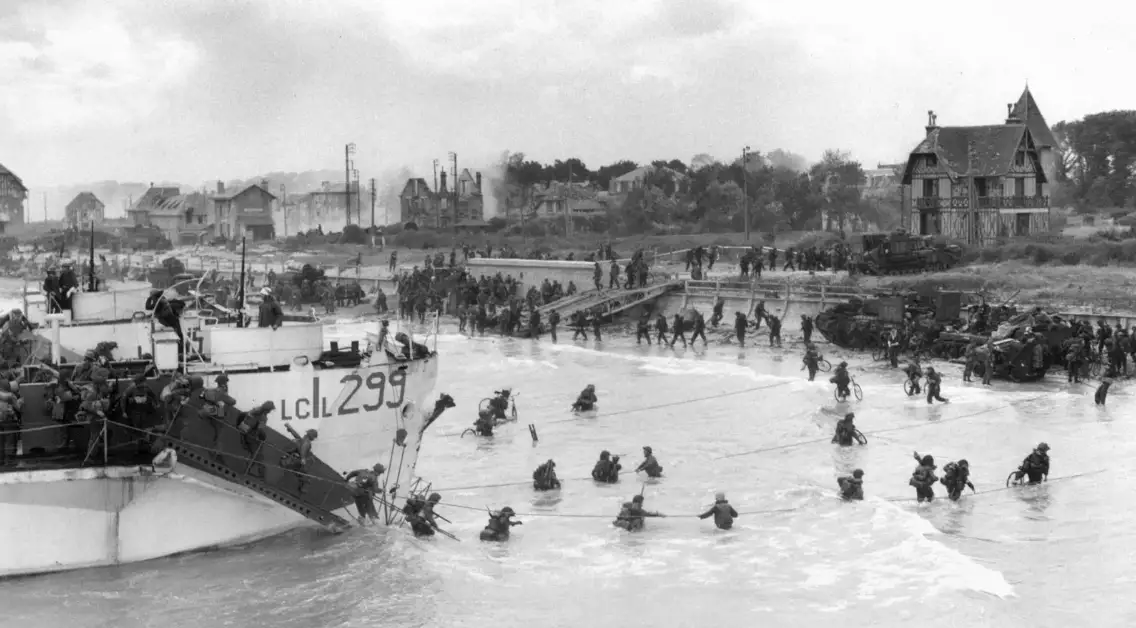
Every year on June 6, Canadians gather to remember D-Day. We remember the young men who climbed into landing craft in the darkness before dawn. We remember the soldiers who crossed the English Channel, knowing that many would never return. We remember the Canadians who stormed Juno Beach and fought their way inland through machine gun fire, artillery barrages, and determined German resistance. We call them the Greatest Generation, and rightly so.
It is easy to look back on those men and women with admiration. It is harder to ask a more uncomfortable question. Could Canada still produce such a generation today? Many Canadians have their doubts. We live in an age of political division, declining trust in institutions, and growing cynicism about public life. We hear constant claims that Canada is fragmented and that our sense of national purpose has weakened beyond repair.
Some argue that Canada has become little more than a collection of competing interests held together by geography and government programs. Others question whether a country as diverse as ours can still rally around a common cause. These concerns deserve to be taken seriously. Yet they overlook something important about both our history and our present. They underestimate the enduring strength of the Canadian character.
The Canada that landed on Juno Beach was not a perfect country. It was smaller, poorer, and less prosperous than the Canada of today. It was still emerging from the hardships of the Great Depression. Opportunities were scarce, families struggled, and political disagreements were sharp. Yet when freedom came under threat, Canadians did not retreat into cynicism. They answered the call.
More than one million Canadians served during the Second World War. They came from farms in Saskatchewan, fishing villages in Nova Scotia, factories in Ontario, mining towns in Quebec, and communities across the Prairies and British Columbia. Many were the children of immigrants. Some were immigrants themselves. They did not all share the same language, background, religion, or politics. What united them was a belief that Canada was worth defending and that freedom carried obligations as well as rights.
That lesson remains relevant today. Much is made of Canada’s diversity, often as though it were something new. It is not. Canada has always been shaped by successive waves of newcomers. Before the Second World War, millions of immigrants arrived from Britain, Ukraine, Germany, Italy, Poland, and countless other places. Yet when war came, those differences became secondary to a larger Canadian identity.
The challenge facing Canada today is not a lack of courage. It is a lack of confidence. We have become hesitant to speak about national purpose. We celebrate individual achievement but often neglect collective responsibility. We are quick to identify our shortcomings but reluctant to acknowledge our strengths. We spend more time debating what divides us than discussing what unites us.
Yet the evidence of Canadian character remains all around us. We saw it in Afghanistan, where Canadian soldiers fought with professionalism and determination alongside our allies. We see it when communities rally around families facing tragedy. We see it during floods, wildfires, ice storms, and other emergencies when Canadians step forward to help one another. We see it in the thousands of men and women who continue to serve in uniform and volunteer in their communities every day.
The qualities that carried Canadians across Juno Beach did not disappear with that generation. Courage, duty, sacrifice, perseverance, and love of country are not inherited genetically. They are values that must be taught, reinforced, and expected. They remain present in every generation if leaders, families, schools, and institutions are prepared to cultivate them.
D-Day also reminds us that national strength is not measured solely by economic statistics, military equipment, or government programs. It begins with something more fundamental: a shared belief that our country is worth preserving. The soldiers who landed on Juno Beach believed Canada was worth fighting for. They believed future generations deserved freedom, security, and opportunity. Their sacrifice was an act of faith in a future they would never see.
As we reflect on D-Day, we should certainly honour the dead. But we should also honour them by rejecting the fashionable pessimism that suggests Canada is in irreversible decline. Our challenges are real, but so are our strengths. The generation that liberated Europe handed us a remarkable country. Our responsibility is not merely to remember what they accomplished. It is to prove ourselves worthy of it.
The men who landed on Juno Beach showed the world what Canadians could achieve when united by purpose. Eighty-two years later, Canada still possesses that same capacity for courage, service, and national unity. The question is not whether it exists. The question is whether we have the wisdom, confidence, and determination to call upon it once again.