
The Conservative Movement in Canada Is Alive and Well
Last week in Ottawa, hundreds of Canadians gathered at the Canada Strong and Free Network conference to debate ideas, challenge assumptions, and discuss the future of the country. Contrary to the narrative often advanced by parts of the media and political establishment, the conservative movement in Canada is not fractured, exhausted, or retreating. It is alive, serious, intellectually engaged, and increasingly focused on the central question facing this country: how do we restore Canadian performance?
What was evident throughout the conference was not anger or grievance, but concern. Concern that Canada is drifting economically, institutionally, and strategically at a time when the world is becoming more competitive, more dangerous, and less forgiving of complacency. Conservatives are not gathering because they believe Canada is beyond repair. They are gathering because they believe Canada remains worth fighting for.
The discussions at CSFN reflected something deeper than partisan politics. They reflected a growing realization that Canada’s challenges are no longer distant or hypothetical. Productivity has stagnated for nearly a decade. Major national infrastructure projects take years longer than comparable projects in allied countries. Housing affordability has deteriorated to levels unimaginable for many young Canadians. The Canadian Armed Forces struggle with recruitment shortages while global instability increases. Our economy remains overly dependent on exporting raw resources without sufficient national ambition to build strategic industrial capacity at scale.
Canadians can feel this decline. They may not always describe it in policy language, but they understand that the country no longer moves with the same confidence or effectiveness that once defined it. What conservatives increasingly offer is not simply opposition to the government of the day. They are offering an argument for competence. For execution. For rebuilding institutional seriousness.
The modern conservative movement in Canada is evolving beyond transactional politics and daily outrage cycles. What is emerging is a coalition focused on economic growth, national resilience, energy security, defence capability, civic responsibility, and governmental effectiveness. It is increasingly a movement grounded not in nostalgia, but in restoration. Restoration of national confidence. Restoration of state capacity. Restoration of the idea that decisions can still be made and large things can still be built in this country.
One of the most encouraging aspects of the conference was the diversity of participants. Entrepreneurs, military veterans, academics, students, energy executives, policy thinkers, and community leaders all contributed to the discussion. Many came from different regions and cultural backgrounds, yet they shared a common belief that Canada’s future cannot be managed solely through communication strategies and symbolic politics. It requires practical action.
The conservative movement also increasingly understands that national unity must be reinforced through civic nationalism rather than identity fragmentation. Canadians do not need to agree on everything to remain cohesive. But they do need to believe they are part of a common national project. Shared responsibilities matter. Shared institutions matter. Shared citizenship matters. That is particularly important at a moment when many Western democracies are experiencing polarization, social fragmentation, and declining trust in institutions. Canada is not immune from these pressures. But neither is it powerless against them.
The conversations taking place at CSFN demonstrated that there remains a large constituency of Canadians who still believe in merit, responsibility, economic freedom, strong institutions, democratic accountability, and national cohesion. These are not fringe concepts. They are core principles that have shaped successful democratic societies for generations.
Critics often caricature conservative conferences as ideological echo chambers. The reality is quite different. The discussions were often rigorous, nuanced, and internally critical. Serious movements challenge themselves. They debate policy. They reassess assumptions. They confront reality rather than avoid it. That is healthy for democracy.
Canada benefits when serious people engage seriously with the country’s problems. It benefits when political movements develop ideas rather than slogans. And it benefits when citizens remain optimistic enough to continue investing their time, energy, and reputation into improving the country. What I saw in Ottawa this week was not a movement in decline.
I saw a movement preparing to govern.
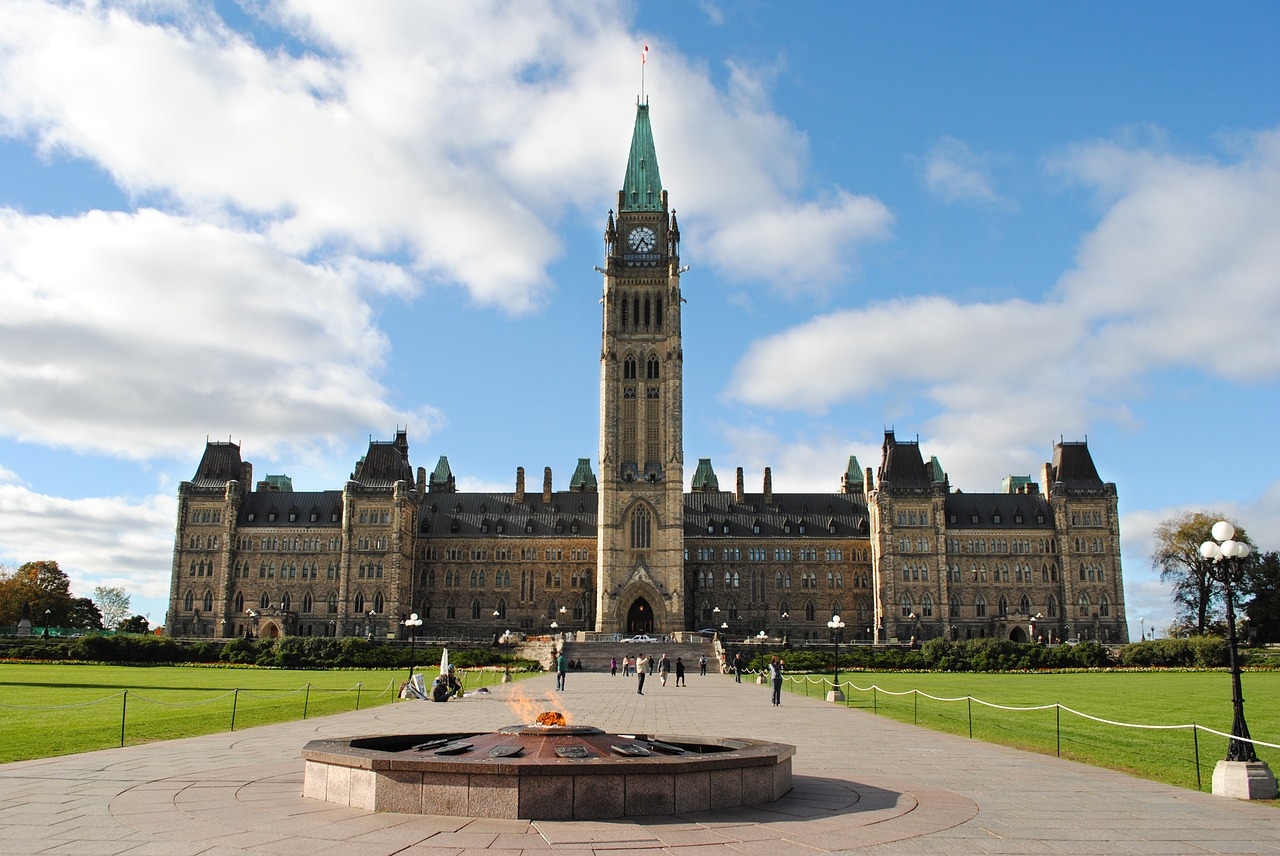
Image: Courtesy Canada Strong and Free Network