OpEd: Carney’s Test Is Delivery
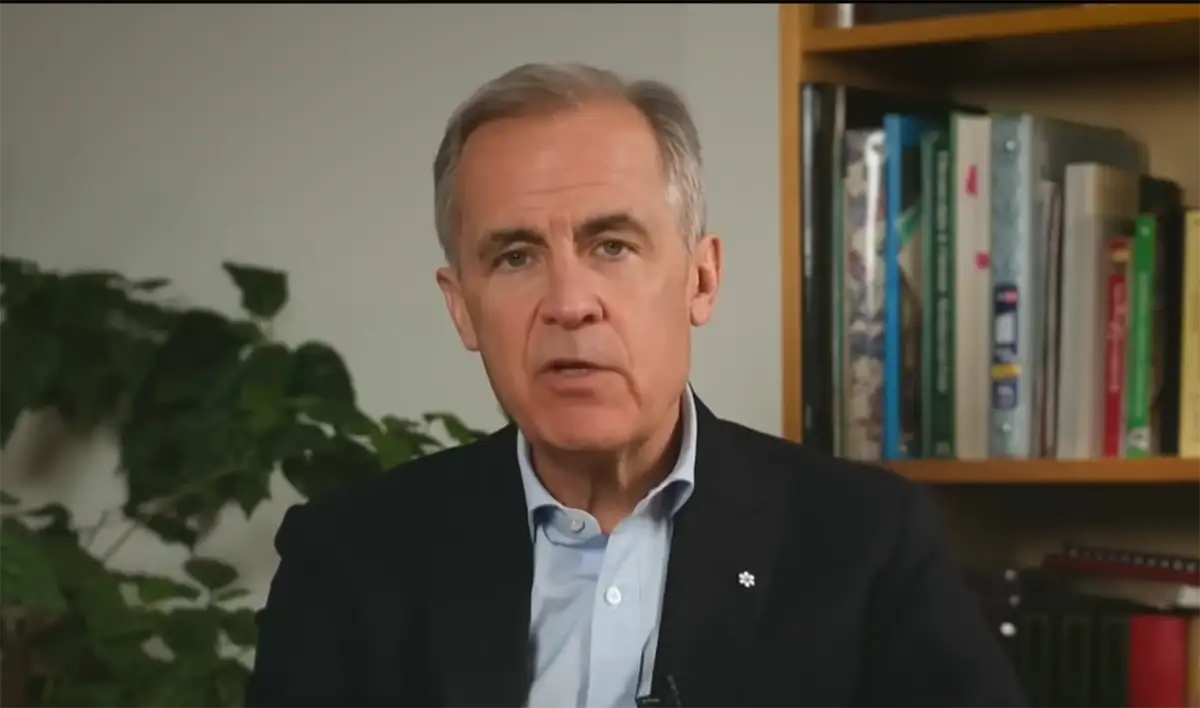
Prime Minister Mark Carney has released a nine-minute video titled Forward Guidance. It is not a policy announcement. It is a governing thesis. His central claim is straightforward: Canada’s long-standing economic dependence on the United States has shifted from advantage to vulnerability. The world has hardened, American policy has become less predictable, and the assumption that access to the U.S. market will anchor Canadian prosperity is no longer sufficient. Nostalgia is not a strategy.
On the diagnosis, Carney is largely correct. Canada is a middle power operating in a more coercive environment, where trade can be weaponized, tariffs can serve political ends, and supply chains can be redirected. In that context, over-concentration carries real risk. A serious government must acknowledge that reality and plan accordingly.
Carney’s message is an attempt to prepare Canadians for that shift. He frames economic adaptation as a question of sovereignty, not in abstract terms but in practical ones: control over investment, resilience in production, and the capacity to act without undue exposure to decisions made in Washington. That is disciplined thinking, and it is also politically astute.
He is not speaking like a campaigner. He is speaking like a central banker explaining a regime change. Calm, measured, deliberate. The structure of the message is equally intentional: define the problem, assert agency, invoke national capacity, then call for collective effort. It is designed to steady the public while signalling that change is coming.
Where the video is strongest is in its realism. Carney does not promise a return to the pre-Trump order. He does not suggest that Canada can simply wait out American volatility. He is telling Canadians plainly that the model has changed and that the country must adapt. That is the right starting point.
But governing is not diagnosis. It is execution, and here the message begins to thin. Carney points to the right categories: attracting investment, removing interprovincial trade barriers, scaling energy, building housing, diversifying markets. The issue is not direction. It is detail. What comes first, who is accountable, what is the timeline, and what are the trade-offs?
These are not technicalities. They are the essence of governing. Canada cannot diversify away from the United States in the short term. Geography, infrastructure, and capital flows do not move on command. The task is more complex: reduce vulnerability over time while managing the relationship in the present. That requires a dual-track strategy grounded in serious engagement with Washington alongside disciplined domestic reform.
It also requires state capacity. Not rhetoric, but execution. Removing interprovincial trade barriers means confronting provincial interests. Building energy infrastructure requires decisions that will face opposition. Attracting capital demands regulatory certainty and competitive tax treatment. Scaling housing requires permitting reform at a pace governments have historically avoided. None of this is impossible, but none of it is achieved through framing alone.
There is also a deeper tension in Carney’s approach. A more sovereign and resilient economy implies a more active federal role: industrial policy, investment steering, and regulatory coordination. These tools can be effective, but they carry risk. They can distort markets, crowd out private initiative, and expand bureaucracy if not tightly managed. Carney understands the world as it is, not as it was. But Canadians will not accept abstraction indefinitely. He has set the direction. Now he must deliver the results.
The country does not need more guidance; it needs results.
Watch Forward Guidance with Prime Minister Mark Carney below:
Photo: Screenshot from Forward Guidance with Prime Minister Mark Carney