
Power Before Prosperity? Understanding the Incentives Driving the Carney Government

Politics is often less about solving problems than managing incentives. If we want to understand the direction of the Carney government, we should spend less time listening to what it says and more time examining what serves its political interests. Two dynamics may help explain the government’s current economic direction.

The first is the ongoing Canada-United States trade dispute. Canadians understandably want a stable, long-term trading relationship with our largest ally and customer. More than three-quarters of Canada’s merchandise exports are destined for the United States, and international trade accounts for roughly two-thirds of our economy. Millions of Canadian jobs depend directly or indirectly on access to the American market. Yet politics does not always reward economic success.

Donald Trump has become the Liberal Party’s ideal political foil. As long as trade tensions dominate the national conversation, the government can present itself as defending Canadian sovereignty against an unpredictable American president. That narrative rallies supporters, reinforces national unity behind the government, and shifts public attention away from domestic challenges such as affordability, productivity, and economic growth.

That raises a legitimate question. Is there sufficient political incentive to secure a rapid and comprehensive CUSMA agreement? Or does a prolonged dispute, despite its economic costs, offer greater political value by keeping the focus on Donald Trump rather than on the government’s domestic record? No one can answer that question definitively, but it is one worth asking.

The second dynamic is domestic. Canadians have heard repeated announcements about nation-building projects, energy corridors, critical minerals, ports, and infrastructure. The ambition is encouraging. The results remain difficult to see. Capital is remarkably indifferent to political speeches. It simply flows where the investment climate is most attractive.

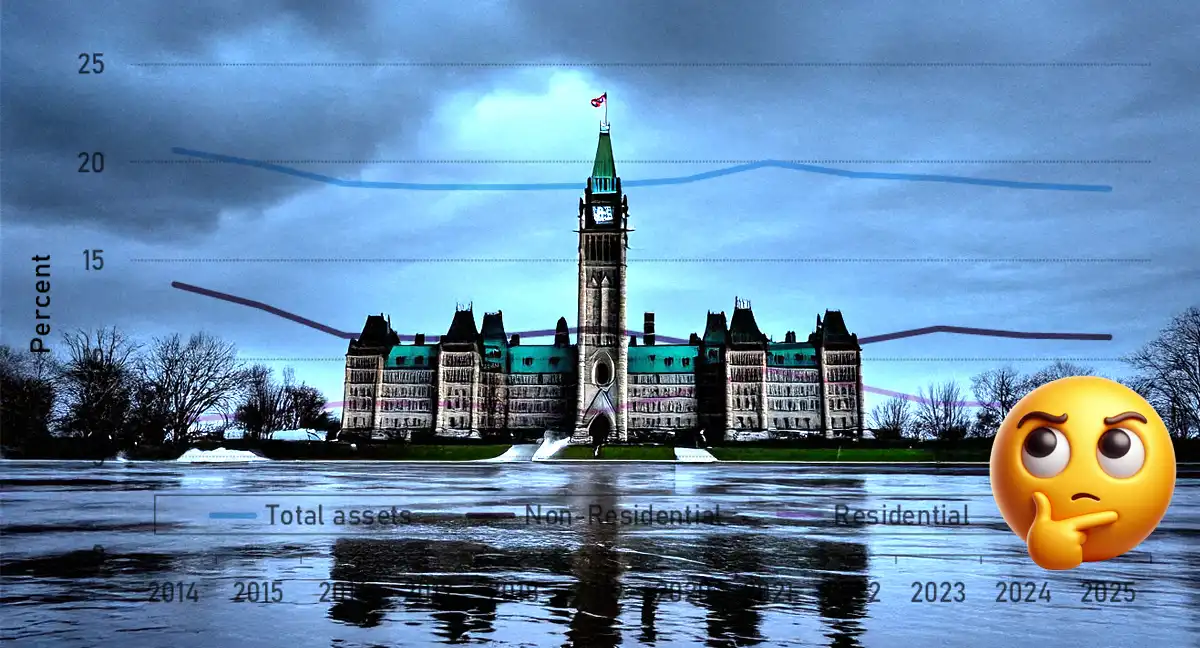
According to the federal Department of Finance, business investment in Canada has remained essentially flat over the past decade while business investment in the United States has continued to grow. Canadian businesses also invest only about 55 cents in productive capital for every dollar invested by American businesses, and only 41 cents on the dollar when it comes to machinery and equipment. Those numbers help explain Canada’s lagging productivity, weaker wage growth, and declining competitiveness.

Why has the government not acted more decisively? One possible explanation is political arithmetic. Removing regulatory barriers, accelerating project approvals, and supporting major energy and resource developments would likely create friction within the progressive wing of the Liberal Party and risk losing support to the NDP. Maintaining political cohesion may therefore take precedence over maximizing economic growth.

If that assessment is correct, both Canada’s trade policy and its domestic economic agenda are increasingly being shaped by political incentives rather than by long-term national interests.

Canada deserves better. Our relationship with the United States should be guided by strategic and economic necessity, not by political convenience. Our regulatory system should attract investment rather than discourage it. And Canadians should expect governments to earn re-election by solving the country’s problems, not by preserving them.